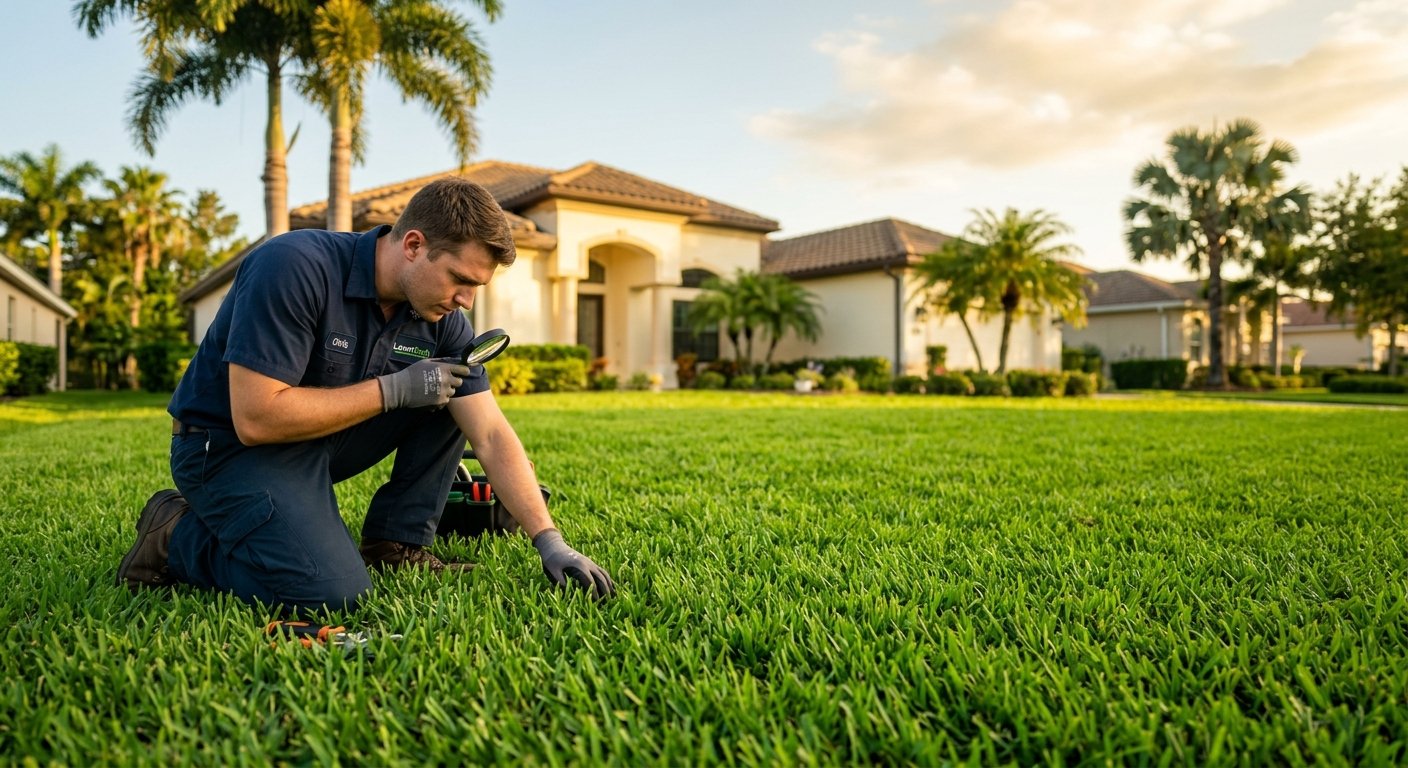
You water it. You mow it. You’ve tried the bag of fertilizer from the hardware store. But something still isn’t right. If your lawn keeps struggling despite your best efforts, you’re not alone—and it may be time to stop troubleshooting and start partnering with someone who knows exactly what Clearwater lawns need.
Florida lawns are genuinely different from what most lawn care advice is written for. The combination of intense heat, high humidity, sandy soil, Gulf salt air, and local pests like chinch bugs creates challenges that require local expertise—not generic solutions. Knowing when to call in a professional can save you time, money, and a lot of frustration.
Your Lawn Has Bare or Thinning Patches
Bare patches are one of the most common reasons homeowners reach out to a lawn care service in Clearwater, FL. While a single thin spot might just need overseeding or a watering adjustment, widespread or spreading bare areas almost always signal something bigger.
In Clearwater and Pinellas County, the most likely culprits include:
- Chinch bugs – These tiny insects feed on St. Augustine grass (the most common lawn type in our area) by sucking out plant fluids and injecting a toxin that blocks water movement. Damage looks like yellowing that turns brown and spreads outward, often starting near driveways, sidewalks, or other heat-reflecting surfaces.
- Brown patch disease – A fungal disease that thrives in our warm, humid conditions. It creates roughly circular brown patches that can expand quickly if untreated.
- Soil compaction or poor drainage – Low areas that stay wet after rain, or compacted spots where nothing wants to grow.
- Salt damage – If you live close to the Gulf, salt spray and saltwater intrusion can cause grass to brown along edges nearest the water.
Diagnosing the right cause requires knowing what to look for—and treating the wrong problem makes things worse. A professional lawn care team in Clearwater can correctly identify the issue and apply the right solution the first time.
You’ve Treated a Problem and It Keeps Coming Back
This is one of the clearest signs that professional help is warranted. If you’ve applied over-the-counter treatments for weeds, fungus, or insects and the problem returns within weeks, the issue likely runs deeper than a surface-level product can address.
Persistent weed pressure, for example, often indicates an underlying imbalance—poor soil health, irregular mowing heights, or irrigation patterns that favor weed germination over grass growth. Recurrent fungal disease may mean your lawn is staying wet too long, possibly due to overwatering or compacted soil that doesn’t drain well.
A Clearwater lawn care company with local experience doesn’t just treat symptoms. They examine the full picture—soil condition, grass type, mowing history, irrigation schedule—and address root causes rather than chasing recurring problems.
Signs of Salt Damage From Gulf Proximity
This is a challenge that most national lawn care chains simply aren’t equipped to handle the way local specialists are. Homes near the Gulf in Clearwater and Belleair face consistent exposure to salt spray, which can accumulate on grass blades and in the soil over time.
Salt damage typically shows up as:
- Browning or scorching along grass blade tips
- Yellowing that doesn’t respond to fertilizer
- Stunted growth even with regular watering
- Turf dieback that’s worst on the side of your property facing the water
Managing salt damage involves specific flushing techniques, proper fertilization to restore soil balance, and sometimes selecting more salt-tolerant grass varieties. According to the University of Florida IFAS Extension, understanding soil salinity levels and proper irrigation management are critical steps that DIY homeowners often miss entirely.
Your Lawn Looks Different From Your Neighbors’
It sounds simple, but this is a genuinely useful benchmark. If lawns in your neighborhood look thick, green, and healthy while yours appears thin, yellow, or patchy—even with similar conditions—something specific to your property needs attention.
Common property-specific issues include:
- Soil pH imbalance making nutrients unavailable to grass roots
- Irregular watering zones leaving dry or waterlogged areas
- Tree root competition stealing moisture and nutrients from grass
- A lawn variety that doesn’t suit your sun and shade conditions
A professional lawn assessment identifies these hidden variables quickly. Our team at Schwahn’s Lawns has worked across Clearwater, Belleair, and Sarasota properties long enough to recognize the subtle differences between neighborhoods and even individual streets that affect how a lawn performs.
You’re Heading Into Hurricane Season Unprepared
Florida homeowners have to think about their lawns differently when June arrives. Hurricane season runs June through November, and proper lawn preparation matters more than most people realize.
Overgrown or stressed turf is more vulnerable to wind damage, disease, and flooding stress. Proper pre-storm mowing heights reduce the risk of grass lying flat and developing fungal issues after heavy rain. Debris removal and proper edging help prevent standing water and reduce conditions that invite pests after a storm.
The National Weather Service consistently advises Florida residents to prepare their properties before major weather events—and that includes outdoor landscaping decisions, not just structural preparations.
If you want your lawn to bounce back quickly after a storm, it needs to be in good health before the storm hits. That’s where consistent professional care makes a real difference.
You Simply Don’t Have the Time or Right Equipment
This is a perfectly valid reason to hire a professional, and it’s worth saying plainly. Proper lawn care in Florida’s climate isn’t a once-a-week mow. St. Augustine grass grows aggressively during the rainy season and needs consistent mowing at the right height (typically 3.5 to 4 inches) to stay healthy. Fertilization timing, weed control applications, and pest monitoring require regular attention on a schedule that most homeowners can’t realistically maintain.
The right equipment also matters. Dull mower blades tear grass rather than cutting it cleanly, creating entry points for disease. Proper edging tools, calibrated spreaders for fertilizer, and the right nozzles for weed control applications all affect outcomes significantly.
Investing in a reliable lawn care service in Clearwater, FL often costs less than most homeowners expect—especially when compared to the cumulative expense of products, equipment, and time spent on trial-and-error fixes.
Florida’s Seasonal Rhythm Confuses You
If you moved to Clearwater from another state, you’ve probably noticed that traditional lawn care calendars don’t apply here. Florida doesn’t follow the four-season model. Our lawns have a warm, active growing season that essentially runs year-round, with a drier “cool” period in winter that still requires maintenance.
Knowing when to fertilize, when to back off on nitrogen, when pest pressure peaks, and when disease conditions are highest requires local pattern recognition that takes time to learn. Our team understands Pinellas County’s specific rhythm—when chinch bug season typically intensifies, when brown patch is most likely to flare up, and how to adjust care plans based on our local rainfall patterns and humidity levels.
For a full overview of what professional care looks like throughout the year in our area, our Clearwater lawn care service page walks through what ongoing care involves and how we approach it as your local partners.
Frequently Asked Questions
How do I know if I have chinch bugs or another problem?
Chinch bug damage typically starts in hot, sunny areas near pavement or sidewalks and spreads outward in irregular yellow-to-brown patches. You may also notice damage advancing despite watering. A simple test: push a bottomless coffee can into an affected area, fill it with water, and watch for tiny black and white insects floating to the surface. If you’re unsure, a professional assessment is the most reliable next step.
Is professional lawn care in Clearwater worth the cost for a small yard?
For most homeowners, yes. Florida lawns require year-round attention, and the cost of products, equipment, and wasted treatments from misdiagnosis often exceeds what a professional service costs annually. Consistent professional care also protects your property value over time.
How often should a professional service visit my Clearwater lawn?
Most Clearwater lawns benefit from service every two to four weeks depending on the season. During the rainy season (June through September), growth accelerates and visits may be more frequent. During drier winter months, intervals can extend slightly while still maintaining soil health and pest monitoring.
Can salt damage from the Gulf be reversed?
In most cases, yes. With proper soil flushing, adjusted fertilization, and corrected irrigation practices, salt-damaged lawns can recover—though recovery takes time. Catching salt stress early makes a significant difference in how quickly and fully the lawn bounces back.
What should I look for in a lawn care company in Clearwater?
Look for local experience with Florida’s specific grass types and pest pressures, clear communication about what treatments are being applied and why, and a team that treats your lawn as an ongoing relationship rather than a one-time transaction. Ask whether they’re familiar with your specific neighborhood’s conditions.
Ready to Stop Guessing?
If any of these signs sound familiar, your lawn is telling you something. The good news is that most lawn problems are recoverable with the right approach—and catching them early always makes the job easier.
Schwahn’s Lawns serves homeowners and businesses throughout Clearwater, Belleair, and Sarasota as your local Florida lawn care specialists. We don’t offer cookie-cutter programs—we learn your lawn, your property’s quirks, and what it needs to thrive in our specific corner of Florida.
Explore our lawn mowing services or learn more about how we care for Belleair properties specifically. Or simply reach out—we’d love to take a look at your lawn and give you an honest assessment of where things stand. No pressure, just good local advice from neighbors who genuinely care about your outdoor space.