Here’s a question we hear all the time from homeowners across Clearwater and Pinellas County: “Aren’t edging and trimming the same thing?” It’s an easy assumption to make, especially when you watch a lawn crew moving from one tool to another around your yard. But these are two distinct services that do very different jobs — and understanding the difference can completely change how you think about your lawn’s finished appearance.
The short answer: edging creates sharp, defined borders between your lawn and hard surfaces like driveways, sidewalks, and flower beds. Trimming cuts grass in areas a mower can’t reach, like around trees, fences, and tight corners. Both are essential. Neither replaces the other. And in Florida’s fast-growing lawn environment, skipping either one shows quickly.
What Is Lawn Edging?
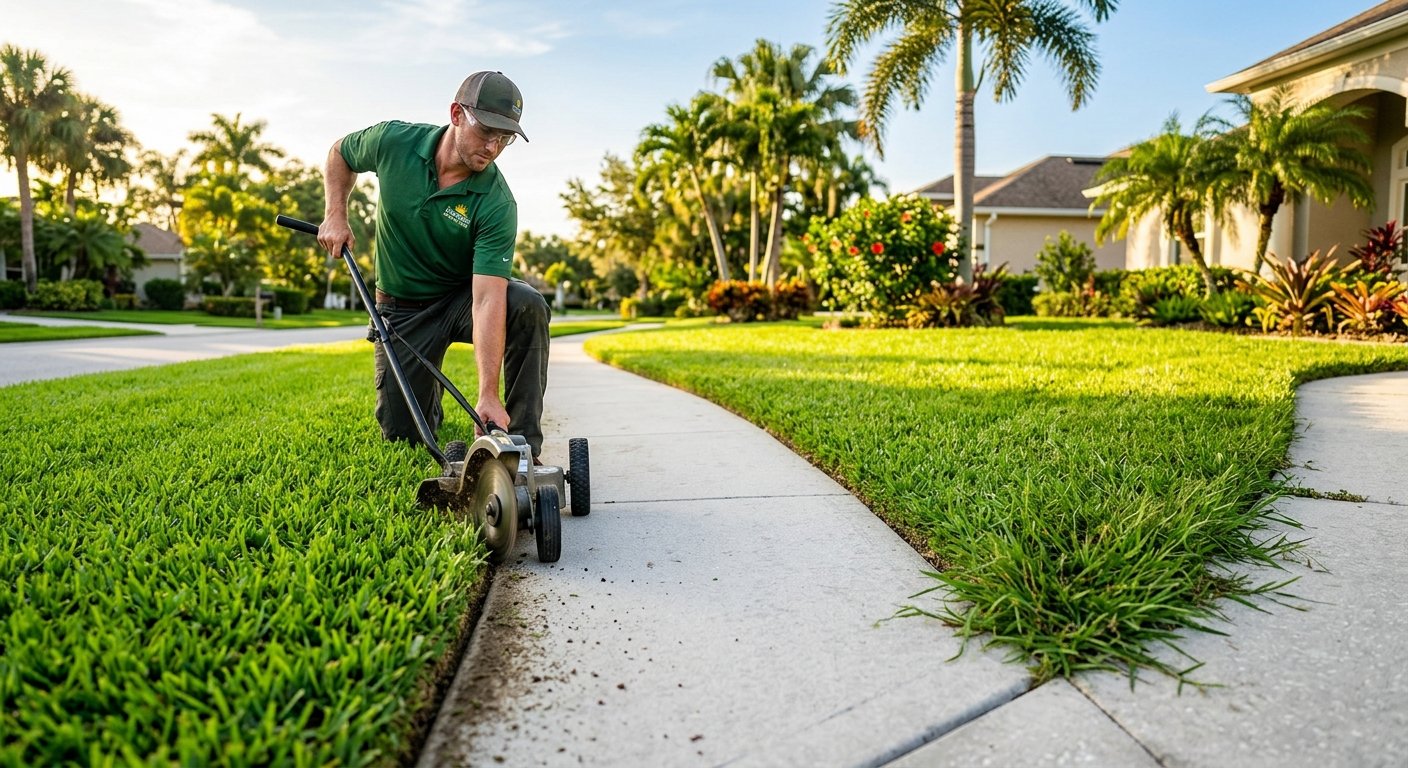
Lawn edging — sometimes called precision lawn edging or lawn border trimming — is the process of cutting a clean, vertical line along the boundary where your grass meets a hard surface. Think of the crisp edge you see along a sidewalk or driveway when a lawn looks truly polished. That’s edging.
The tool used for edging typically has a blade that runs vertically into the soil, slicing through grass runners and roots that creep over the boundary over time. In Florida, warm-season grasses like St. Augustine and Zoysia are aggressive spreaders. Without regular edging, they’ll push steadily onto your driveway, into your flower beds, and along your walkways — creating that ragged, overgrown look that no amount of mowing can fix.
Where Edging Happens
- Along driveways and sidewalks
- Around planting beds and mulched areas
- Between lawn and hardscape borders
- Along curbs and street edges
- Around pool decks (for properties with outdoor living spaces)
Good edging doesn’t just look sharp — it also helps keep grass roots from invading landscaped areas, reducing competition for nutrients and water. For homeowners searching for a professional lawn edging service or landscape edging near me, this is often the detail that makes the biggest visible difference.
What Is Lawn Trimming?
Trimming — often searched as grass trimming near me — is handled with a string trimmer (sometimes called a weed eater) and focuses on cutting grass that a mower simply cannot reach. It’s not about creating a line; it’s about finishing the cut in all the awkward spots your mower rolls past.
Every lawn has these zones. The narrow strip along a fence line. The grass growing up around a tree trunk or mailbox post. The corners of your yard where the mower turns but can’t quite get flush. Without trimming, these areas grow noticeably taller than the rest of your lawn, giving it an unkempt look even when the main lawn is freshly mowed.
Where Trimming Happens
- Around tree trunks, shrubs, and ornamental plants
- Along fence lines and walls
- Around utility boxes, AC units, and mailboxes
- In tight corners that mower blades miss
- Around stepping stones and garden features
In Clearwater’s coastal environment, grasses can grow aggressively year-round thanks to our warm temperatures and humidity. That means trimming isn’t a once-in-a-while task — it’s a consistent part of proper lawn maintenance, not an optional add-on.
Why Both Matter for Florida Lawns
Florida’s lawn care calendar doesn’t follow the traditional four-season rhythm that national lawn care guides typically reference. Here in Pinellas County, our grass grows actively for most of the year. According to the University of Florida IFAS Extension, warm-season turfgrasses like St. Augustine — the most common lawn grass in our area — require consistent maintenance throughout much of the year to stay healthy and looking their best.
What that means practically: the grass along your driveway can go from “barely noticeable” to “completely overgrown” in just two to three weeks during peak growing season. Edging and trimming are what separate a yard that just gets mowed from one that genuinely looks cared for.
There’s also a functional argument. Grass runners that grow unchecked over concrete or into beds can trap moisture against hard surfaces, contributing to staining and even surface deterioration over time. Regular lawn border trimming keeps those organic boundaries clean and protects your hardscape investment.
The Tools Are Different — So Is the Technique
One reason people confuse edging and trimming is that both can technically be done with a string trimmer if you rotate it sideways. But precision matters. A dedicated edger creates a cleaner, more defined cut than a string trimmer tilted on its side. For homeowners looking for a lawn detail service near me or edge trimming service, this distinction in technique is exactly where professional results diverge from DIY results.
Professional lawn crews understand the difference between maintaining an existing edge versus restoring a neglected one. Restoring a badly overgrown edge sometimes requires cutting back significant grass encroachment — a more involved job than routine maintenance. Staying on schedule prevents that extra work and keeps your lawn looking consistently sharp.
Salt Air and Coastal Lawns: A Local Consideration
For homeowners in Clearwater and along the Pinellas County coastline, there’s another layer to consider: salt damage. Gulf breezes carry salt air inland, and lawns close to the water can experience stress along their edges and borders — often the most exposed parts of the yard. This makes clean, healthy edging even more important, as stressed or damaged grass along borders can become an entry point for pests like chinch bugs.
Chinch bugs, one of the most common and damaging lawn pests in our region, often begin their damage in hot, dry border areas — exactly where edging meets hardscape. Keeping those borders clean and the surrounding grass healthy is part of an integrated approach to pest prevention. The EPA’s guidance on lawn pest management emphasizes that healthy, well-maintained turf naturally resists pest pressure better than stressed or neglected grass.
Our team at Schwahn’s Lawns understands these local nuances that a national lawn care franchise simply won’t. Serving Clearwater and the surrounding area means we’ve seen firsthand how coastal conditions affect lawn edges and borders differently than inland properties.
How Often Should You Edge and Trim?
For most Clearwater and Pinellas County lawns, edging and trimming should happen with every mowing visit during the active growing season — typically spring through fall, with reduced but still consistent maintenance in winter. Letting either service slide for multiple mowing cycles creates extra work (and sometimes extra cost) to restore the clean look.
If you’re maintaining your own lawn, a good rule of thumb: trim every time you mow, and edge every one to two mowings depending on how aggressively your grass spreads. For St. Augustine lawns especially, leaning toward every mowing for edging will save you significant cleanup effort down the road.
For our clients in Belleair and surrounding communities, consistent edging and trimming is often what sets a property apart on a street full of well-maintained homes. It’s the finishing touch that makes a lawn look professionally cared for rather than simply mowed.
You can learn more about the full scope of what professional edging and trimming entails on our lawn edging and trimming service page.
Frequently Asked Questions
Is lawn edging the same as lawn trimming?
No. Edging cuts a defined vertical line between your lawn and hard surfaces like sidewalks and driveways. Trimming cuts grass in tight areas a mower can’t reach, like around fence posts and trees. Both are separate tasks that work together to give a lawn a clean, finished appearance.
How often should I edge my lawn in Florida?
During active growing season (roughly March through October in Pinellas County), edging should ideally happen with every mow or every other mow. Florida’s warm-season grasses spread quickly and can encroach on borders in a matter of weeks.
Can I use a string trimmer for edging?
You can rotate a string trimmer vertically to edge, but results are generally less precise than a dedicated edger. For clean, professional-looking borders — especially along driveways and sidewalks — a dedicated edging tool produces consistently sharper lines.
Why does professional edging look so much better than DIY?
Professional crews use the right tools for each task, maintain consistent technique, and stay on a schedule that prevents edges from becoming overgrown. Restoring a badly neglected edge takes more time and effort than maintaining a clean one, which is part of why regular professional service pays off.
Does edging help prevent pests in Florida lawns?
Clean edges contribute to overall lawn health, and healthy turf resists pest pressure better than stressed or neglected grass. In Florida, pests like chinch bugs often start in hot, thin border areas — another reason to keep those zones well-maintained.
Let’s Keep Your Lawn Looking Its Best
Whether you’ve been searching for lawn edging and trimming near me or you’re simply tired of a lawn that never quite looks finished, Schwahn’s Lawns is here to help. We’re a local Clearwater team that knows Pinellas County lawns — the grasses, the pests, the salt air challenges, and the year-round growing patterns that make Florida lawn care unlike anywhere else.
We’d love to be your trusted lawn care partner. Reach out to our team today to learn more about our services and how we can help your property look like the home you’re proud of.