
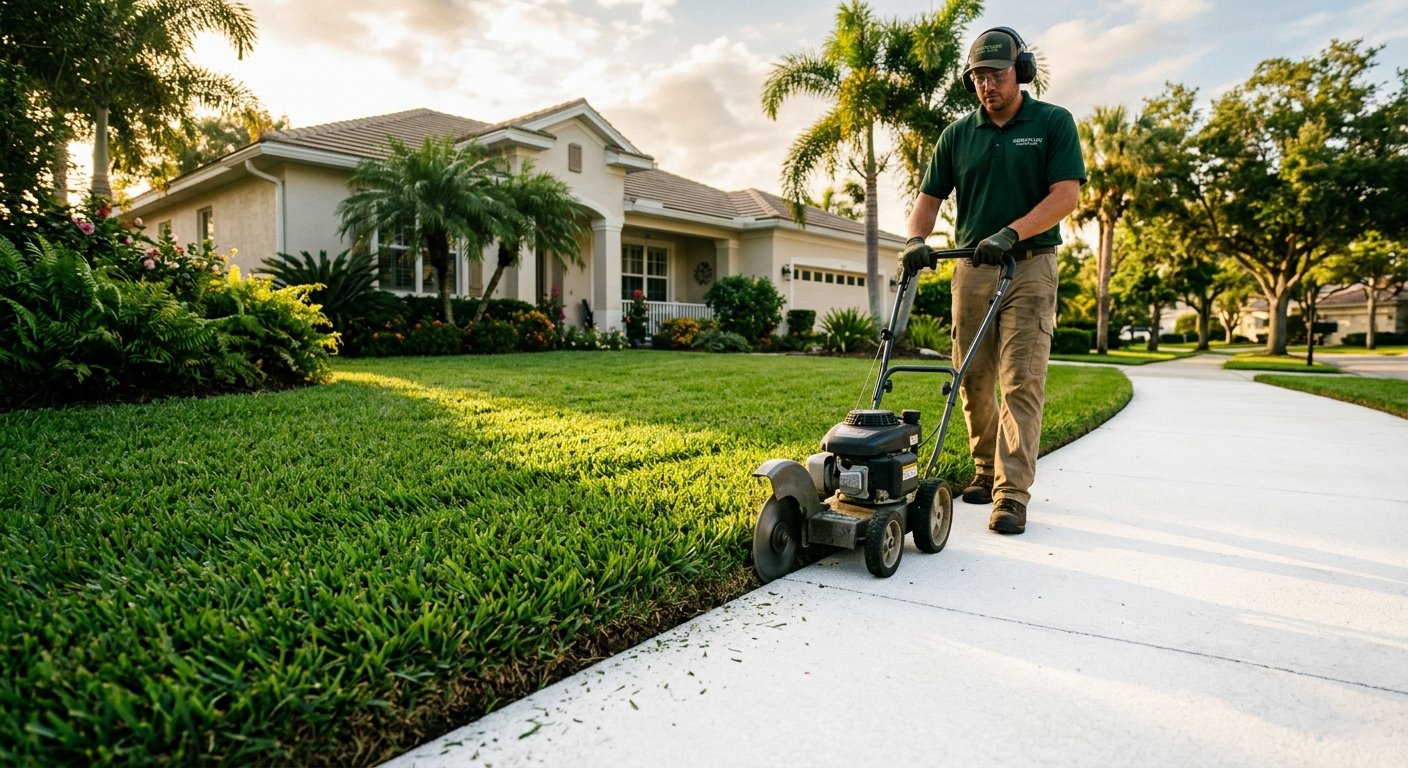
That crisp, clean line between your lawn and driveway — you know the one. It’s the difference between a yard that looks maintained and one that looks loved. In Clearwater and across Pinellas County, where curb appeal matters and neighbors notice, lawn edging is often the detail that separates a good-looking yard from a truly beautiful one.
Whether you’re handling your own lawn maintenance or thinking about handing things off to a professional, understanding the basics of edging will help you make smarter decisions for your property. Here’s what you should know — from the right tools to the unique challenges of keeping Florida turf looking sharp year-round.
Why Lawn Edging Matters More Than You Think
Edging isn’t just cosmetic. When grass is allowed to creep over walkways, driveways, and garden beds, it creates hidden moisture pockets that attract pests and invite disease. Florida’s warm, humid conditions amplify this problem significantly. Overgrown edges trap debris, create ideal breeding grounds for chinch bugs, and make mowing harder over time.
Precision lawn edging also protects your hardscaping. Grass roots that push under concrete can accelerate cracking and shifting — a real concern in Clearwater’s sandy soil conditions. A clean edge done consistently keeps those roots in check and extends the life of your walkways and driveways.
From a pure curb appeal standpoint, research consistently shows that well-maintained landscaping adds measurable value to residential properties. The National Association of Realtors has noted that landscaping projects, including lawn care and edging, deliver strong returns when homes go to market. That tidy border around your lawn signals to neighbors — and future buyers — that you take pride in your property.
The Right Tools for the Job
Choosing the right tool makes all the difference between edging that looks professional and edging that looks rushed. Here are the main options:
- Stick edgers (gas or battery-powered): These are the go-to for straight, clean cuts along driveways and sidewalks. A spinning vertical blade slices through turf at a precise angle. Battery-powered models have improved significantly and work well for most residential properties.
- String trimmers: Versatile but require more skill. Tilting the trimmer vertically creates an edge, but inconsistent technique leads to wavy, uneven results. Best used for curved beds and irregular borders rather than straight hardscape edges.
- Manual half-moon edgers: Great for garden beds and smaller areas, but impractical for longer runs. They’re slow and physically demanding in Florida’s heat.
- Robotic edgers: A growing trend in 2026, though still inconsistent on Florida’s varied terrain and grass types like St. Augustine and Zoysia.
For most Clearwater homeowners with standard St. Augustine turf, a quality stick edger paired with a string trimmer for cleanup is the winning combination.
Florida Grass Types and How They Edge Differently
This is where local knowledge genuinely matters. Not all grass edges the same way, and Pinellas County yards have some specific quirks.
St. Augustine Grass
The most common turf in Clearwater, St. Augustine spreads aggressively through stolons — those thick, above-ground runners that seem to creep across everything. Regular edging is essential because these runners establish quickly along edges. Cut deep enough (about 2–3 inches) to sever the stolon cleanly rather than just trimming the leaf blades.
Zoysia Grass
Zoysia is denser and slower-growing, which means less frequent edging — but when it does need attention, it’s tougher to cut. A sharp, powerful edger is important here. Dull blades tear rather than slice, creating a ragged edge that browns quickly in Florida’s sun.
Bahia Grass
Less common in the Clearwater area but worth mentioning. Bahia’s upright seed heads are often the issue more than creeping edges. Keep seed heads trimmed before they set and spread.
How Often Should You Edge in Clearwater?
Florida doesn’t follow the four-season lawn calendar that most national lawn care guides are written around. In Clearwater, grass grows actively for most of the year, with peak growth during the rainy season from roughly June through September.
Here’s a general edging schedule that works well for Pinellas County:
- June–September (rainy season): Edge every 1–2 weeks. This is when St. Augustine grows fastest and edges get messy quickly.
- October–November (transition): Every 2–3 weeks as growth begins to slow.
- December–February (cooler months): Monthly edging is usually sufficient, though warm spells can trigger spurts.
- March–May (spring green-up): Return to bi-weekly edging as temperatures rise and growth accelerates.
Consistency beats perfection. Edging every two weeks at the right depth is far more effective than doing a major cleanup once a month.
Common Edging Mistakes to Avoid
Even experienced DIYers make these errors. If your edges still look rough after putting in the work, one of these might be the culprit:
- Cutting too shallow: Clipping just the grass tips leaves stolons intact to regrow immediately. Aim for a clean vertical cut 2–3 inches deep along hardscapes.
- Edging a wet lawn: Wet turf tears and clumps. Always edge when grass is dry for the cleanest cut.
- Skipping cleanup: Clippings left on sidewalks and driveways look sloppy and can stain. Always blow or sweep debris immediately after edging.
- Undercutting garden beds: Going too deep along garden beds can expose roots and stress plants. A shallower angle is appropriate here.
- Neglecting curved areas: Corners and curves require slower, more deliberate movement. Rushing creates wobbles and scalloped edges.
Salt, Sand, and the Gulf Coast Factor
Living near the Gulf of Mexico comes with real lawn care implications that most national guides completely miss. Salt drift from the Gulf affects turf along the edges first — those exposed blades along driveways and sidewalks are more vulnerable to salt stress than the interior of your lawn.
Signs of salt damage along edges include yellowing or browning tips, a dried-out appearance despite adequate watering, and grass that seems to pull away from hardscapes. Rinsing edges with fresh water after significant storm events or heavy onshore winds helps dilute salt concentration in the soil.
According to the University of Florida IFAS Extension, salt-tolerant grass varieties and proper irrigation practices are key strategies for Gulf Coast properties. Your edging routine should account for this — avoid cutting edges shorter than necessary near coastal exposures, as longer grass has more buffer against salt stress.
Hurricane Season and Your Edges
Before hurricane season peaks in August and September, edge your lawn and clean up overgrown borders. Overgrown edges hold more debris, and during high winds, that loose material becomes a hazard. After a storm, fallen leaves and branches accumulate fastest in neglected edge zones, making cleanup harder.
Post-storm lawn recovery often starts at the edges — clearing debris, reestablishing clean borders, and assessing any salt or wind damage. Getting those edges right is part of restoring your yard’s overall health after a major weather event.
When Professional Edging Makes Sense
DIY edging is absolutely manageable for some homeowners. But for many Clearwater and Belleair property owners, the combination of Florida’s fast-growing turf, summer heat, and busy schedules makes consistent edging a real challenge.
Professional lawn edging and trimming service brings more than just convenience. A trained eye catches early signs of chinch bug activity along edges, identifies areas of salt stress before they spread, and adjusts technique for your specific grass type. That kind of preventive attention often saves homeowners money down the road.
When searching for a lawn detail service near me or professional lawn edging service in the Clearwater area, look for a team with genuine local knowledge — not a national franchise that sends different crews each week. Consistency matters enormously for lawn health and appearance.
Our team at Schwahn’s Lawns provides clearwater lawn maintenance with that continuity built in. We know Pinellas County turf, we understand Gulf Coast conditions, and we treat each property as if it were our own. Explore our full approach to lawn care in Clearwater, FL to see what that looks like in practice.
Frequently Asked Questions
How deep should I edge along a concrete driveway or sidewalk?
For most Florida grass types, particularly St. Augustine, aim for a vertical cut about 2–3 inches deep. This severs the stolons cleanly and prevents rapid regrowth. Going shallower just trims the surface without addressing the runners that creep over hardscapes.
Can I edge right after it rains?
It’s best to wait until the grass and soil are dry. Wet turf tears rather than cuts cleanly, and wet clippings clump together and are harder to remove from driveways and sidewalks. Dry conditions produce the sharpest, most professional-looking results.
How do I get rid of the grass that has already grown over my driveway?
Use a flat spade or manual half-moon edger to cut back the overgrown section, then follow with a stick edger to establish the clean vertical line. For heavily overgrown areas, this initial restoration pass takes more effort but gives the edger a proper starting point. After that, consistent maintenance keeps it manageable.
Is lawn edging included in standard lawn care services?
It varies by provider. Some services include basic trimming but not true precision edging along all hardscapes. Always clarify what’s included. A quality lawn care Clearwater Florida provider should be transparent about what each visit covers and tailor the service to your property’s needs.
How does salt air from the Gulf affect my lawn edges?
Salt drift concentrates along exposed edges first, causing tip burn and browning that can look like drought stress or disease. Rinsing edges with fresh water after onshore wind events helps, and avoiding cutting edges too short gives the grass more tissue buffer. A local lawn care specialist familiar with Gulf Coast properties will recognize salt stress quickly and recommend appropriate adjustments.
Ready for Edges That Make Your Yard Stand Out?
Clean, crisp edges do more for a lawn’s appearance than almost any other single maintenance task. In Clearwater and across Pinellas County, where outdoor living is a year-round reality, those details matter.
If you’re ready to stop wrestling with your edger on a hot Saturday morning — or if your current lawn service just isn’t delivering the precision your property deserves — we’d love to talk. Reach out to Schwahn’s Lawns today and let’s put together a lawn care plan that makes your outdoor space something you’re genuinely proud of.