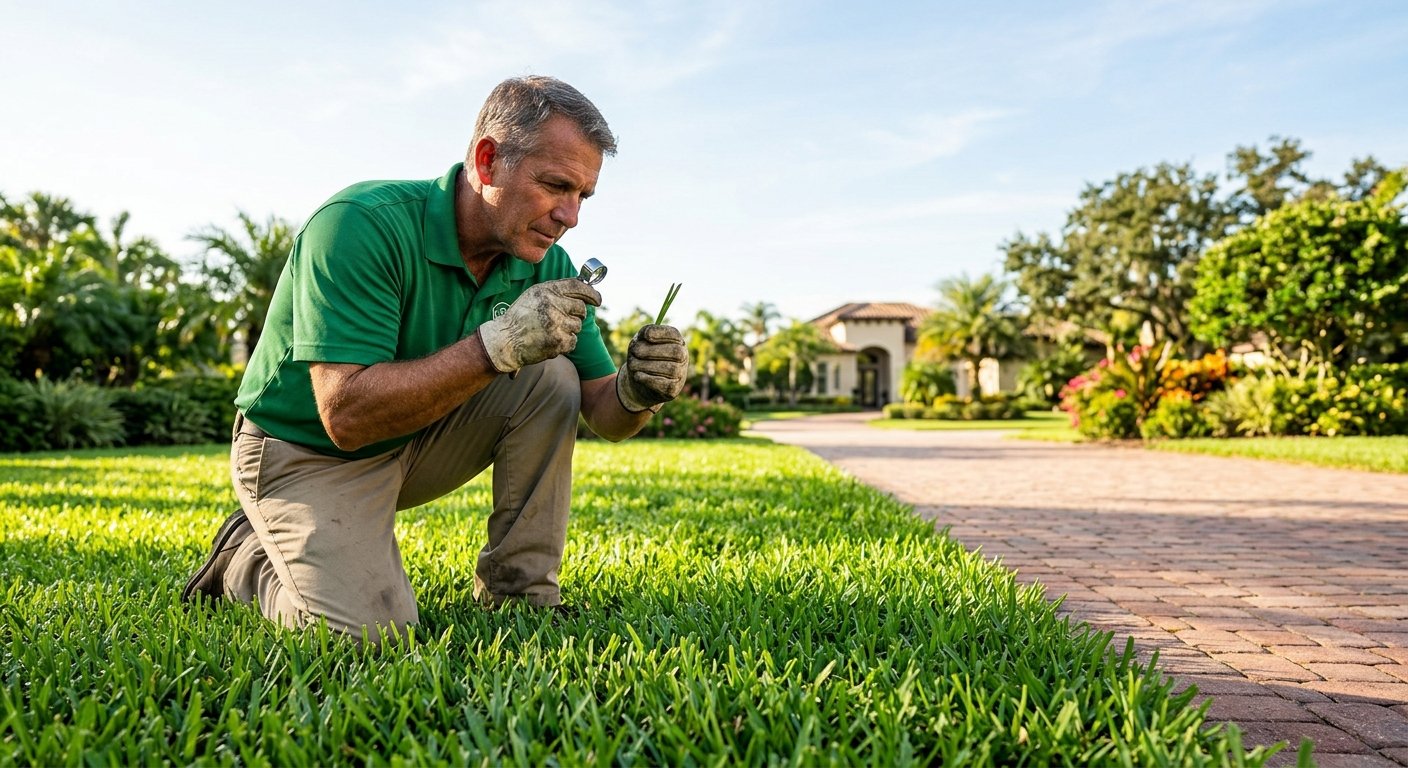
Drive through Belleair on any given morning and you’ll notice something right away—the lawns here are genuinely beautiful. Thick, green St. Augustine grass, tidy edges along brick driveways, landscapes that look effortlessly maintained. But “effortless” is rarely the truth. Behind those healthy lawns is a level of local knowledge that most homeowners don’t have the time or experience to develop on their own.
Belleair sits in one of the most demanding lawn care environments in the country. Gulf proximity means salt air rolls in regularly. Summer rainstorms drop inches of water in an afternoon, then disappear for weeks. Chinch bugs don’t care about your weekend plans. And the soil conditions here behave nothing like what you’d find in the rest of Florida, let alone the national lawn care playbooks many big-box services follow.
This is exactly where local expertise makes all the difference. Here’s what professional lawn care services in Belleair, Florida actually look like when done right—and why it’s so different from what national companies offer.
Florida Doesn’t Have Four Seasons—And Your Lawn Knows It
One of the most common mistakes homeowners make is following a traditional seasonal lawn care calendar. Fertilize in spring, aerate in fall, overseed in October—that advice was written for Kentucky bluegrass in Ohio, not St. Augustine in Pinellas County.
Florida’s grass follows a completely different rhythm. According to the University of Florida IFAS Extension, St. Augustine grass—the most common turf variety in this area—thrives in our warm, humid conditions but requires care that aligns with Florida’s wet and dry seasons, not calendar months.
A local Belleair lawn professional understands that:
- Fertilization timing must account for Florida’s nitrogen restrictions and rainy season runoff
- Mowing height should shift with the season—too low in summer stresses the grass and invites pests
- The “dormant” period is much shorter here and requires a completely different approach than northern climates
- Post-hurricane or heavy storm care is an annual reality, not an occasional emergency
When you work with a team that knows Belleair specifically, you’re getting advice tuned to your microclimate—not a national algorithm built for averages.
The Salt Problem Most Services Ignore
Living near the Gulf of Florida is a gift. Salt air drifting in from the water? That’s both beautiful and quietly destructive to your lawn. Salt damage is one of the most underdiagnosed lawn problems in Belleair and coastal Pinellas County neighborhoods.
Salt accumulation causes leaf burn, inhibits water uptake, and over time can seriously degrade your soil’s structure. After storm events or particularly windy stretches, properties closer to Old Tampa Bay or Clearwater Harbor often show stress symptoms that look like drought or disease—but the actual culprit is salt.
Experienced professional lawn care in Belleair means recognizing these symptoms early. The right response typically involves:
- Deep irrigation to flush excess salt from the root zone
- Soil amendments to restore healthy soil chemistry
- Choosing salt-tolerant grass varieties when re-sodding is necessary
- Monitoring vulnerable areas after storm events, not just during visible decline
A national chain’s technician following a route map won’t catch this. A local team that understands coastal Pinellas will.
Chinch Bugs, Brown Patch, and the Pests Belleair Homeowners Face
Pest and disease management in Belleair requires knowing what to look for before the damage becomes obvious. Two of the most destructive threats to residential lawns here are chinch bugs and brown patch fungal disease—and both are frequently misidentified until significant damage has occurred.
Chinch Bugs
Chinch bugs are tiny, but they’re relentless. They feed on St. Augustine grass by sucking out plant fluids and injecting a toxin that prevents water uptake. The result looks like drought stress—yellowing, then browning patches that expand quickly in hot weather. By the time most homeowners notice, a large section of lawn may already be compromised.
The Florida Department of Agriculture and Consumer Services notes that chinch bug pressure is highest during hot, dry periods—exactly the conditions Belleair experiences every summer. Local pros know to scout for early signs before the damage becomes visible and to treat strategically rather than blanketing the entire lawn with products unnecessarily.
Brown Patch Disease
Brown patch is a fungal disease that thrives during Florida’s cooler, wetter months—typically late fall through early spring when nighttime temperatures drop and humidity stays high. It creates circular patches of dead or discolored grass that can spread rapidly without intervention.
Correct identification matters here. Brown patch treatment with a fungicide only works if applied correctly and at the right time. Misdiagnose it as drought or chinch damage and you’ll waste time and money on the wrong solution while the fungus continues to spread.
This kind of diagnostic expertise is exactly what separates a Florida lawn care specialist from a generalist service.
Hurricane Prep: A Lawn Care Reality in Pinellas County
If you’ve lived in Belleair or the surrounding Clearwater area for any length of time, you know hurricane season isn’t just a concept—it’s a planning reality. What many homeowners don’t realize is that lawn and landscape preparation before a storm significantly affects recovery after one.
Local residential lawn service in Belleair includes proactive steps like:
- Proper mowing height adjustments heading into storm season to reduce wind resistance
- Avoiding fertilization in the weeks before a storm to prevent soft, vulnerable growth
- Post-storm debris clearing that prevents smothering and disease development
- Assessing and addressing compaction and erosion damage after heavy rain events
The Florida Division of Emergency Management encourages residents to prepare their properties holistically before storm season—and lawn care is a genuine part of that preparation, not an afterthought.
What “Personalized” Actually Means in Lawn Maintenance
The word “personalized” gets thrown around a lot in service industries, but in lawn maintenance in Belleair, FL, it means something very specific. No two properties here are exactly alike. Soil composition varies block by block. Shade patterns, drainage characteristics, proximity to saltwater, irrigation setup, and grass variety all influence what a lawn needs and when it needs it.
A professional local team does more than show up and mow. They observe. They notice that the corner of your yard near the fence always stays wetter than the rest. They recognize that the grass near your oak canopy needs different feeding than the sun-exposed sections. They adjust their approach based on what they’re seeing on your specific property—not a generic treatment plan printed from a corporate database.
This is the kind of care that larger national competitors structurally cannot provide. Their model depends on speed and volume. Our model, as Clearwater and Pinellas County Florida lawn care specialists, depends on relationships and results.
If you’re looking for that kind of attentive, locally-informed care, you can learn more about what we offer at our Belleair lawn care services page.
Frequently Asked Questions
What type of grass is most common in Belleair, FL?
St. Augustine grass is by far the most common turf variety in Belleair and throughout Pinellas County. It handles Florida’s heat and humidity well, but it’s also susceptible to chinch bugs, brown patch disease, and salt damage—all of which require specific local knowledge to manage properly.
How often should I have my lawn mowed in Belleair?
During the active growing season (roughly April through October), most Belleair lawns benefit from mowing every one to two weeks depending on rainfall and growth rate. In the cooler, drier months, frequency typically decreases. Mowing height matters just as much as frequency—cutting too short stresses St. Augustine grass and invites problems.
When is the best time to fertilize a lawn in Belleair, Florida?
Florida has specific fertilizer application guidelines, including blackout periods during rainy season to prevent nutrient runoff into local waterways. Generally, the best windows are late spring and early fall, but a local professional will assess your lawn’s specific needs and comply with current Pinellas County regulations before recommending a treatment plan.
How do I know if my lawn has chinch bugs or something else?
Chinch bug damage often looks like drought stress—yellow or brown patches that spread outward, typically in sunny areas. A simple test is to press a can with both ends removed into the affected area, fill it with water, and watch for small black-and-white insects floating to the surface. That said, accurate diagnosis from a professional prevents wasted treatments and faster recovery.
Is professional lawn care worth it for a smaller Belleair property?
Absolutely. Smaller properties in Belleair often have more complex microclimates—more shade variation, proximity to pavement or saltwater features, ornamental borders—that make consistent, informed care just as important as on larger estates. Professional service saves time, prevents costly mistakes, and keeps your property looking its best year-round.
Your Lawn Deserves a Local Partner
Belleair is a special community, and its lawns deserve care that reflects that. Whether you’re frustrated with inconsistent results from a previous service, thinking about stepping back from DIY maintenance, or simply want a reliable team that treats your property with the same pride you do—we’re here for that conversation.
At Schwahn’s Lawns, we serve homeowners and businesses throughout Clearwater, Belleair, and Sarasota as trusted neighbors who understand Florida’s unique lawn challenges firsthand. Explore our Clearwater lawn care services or learn more about our professional mowing services—and reach out when you’re ready to see what local expertise really looks like.