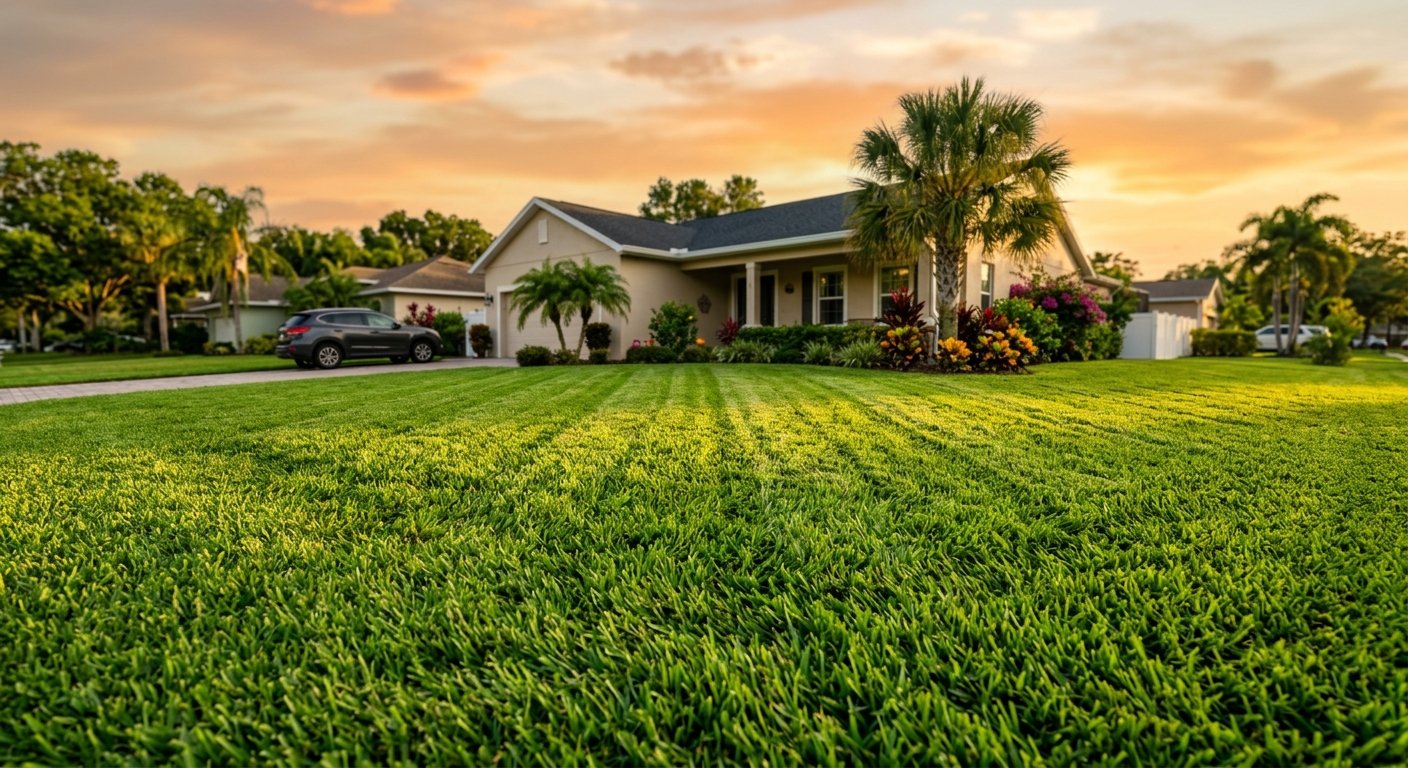
Here’s a question we hear constantly from Clearwater homeowners: “Do I really need my lawn mowed every week, or is every two weeks fine?” It sounds simple, but the answer depends on factors that are uniquely Florida—your grass type, the time of year, rainfall levels, and even how close you are to the Gulf. Getting the frequency wrong doesn’t just affect curb appeal; it can quietly damage your lawn’s health over time.
Let’s walk through what actually determines the right mowing schedule for your yard, so you can make a confident, informed decision.
Why Florida Lawns Don’t Follow Normal Rules
Most lawn care advice you’ll find online is written for lawns in Georgia, Texas, or the Midwest—places with four distinct seasons. Clearwater doesn’t work that way. Our warm, humid climate means grass growth patterns here are unlike most of the country.
St. Augustine grass, which covers the majority of residential lawns in Pinellas County, grows aggressively during our rainy season (roughly June through September). During these months, your lawn can add several inches of growth in a single week. Bahia and Zoysia grasses, though slower-growing, still push out new blades quickly during summer heat.
According to the University of Florida IFAS Extension, the most important rule in lawn mowing is the “one-third rule”: never remove more than one-third of the grass blade in a single mowing session. Cutting more than that sends your lawn into shock, weakening roots and leaving it vulnerable to pests and disease.
This one rule is the single biggest reason mowing frequency matters so much in Florida.
When Weekly Lawn Mowing Is the Right Call
A weekly lawn mowing service isn’t about being overzealous—during Florida’s growing season, it’s simply what the lawn demands. Here’s when you should be scheduling weekly cuts:
- June through September (rainy season): Warm temperatures and frequent afternoon thunderstorms create ideal growing conditions. St. Augustine lawns can grow 1–2 inches per week during this stretch. Weekly mowing keeps you within that one-third rule safely.
- After fertilization: If you’ve recently fertilized your lawn, expect a growth surge. Weekly cuts during this period prevent the lawn from becoming overgrown and uneven.
- High-traffic or high-visibility properties: Commercial properties, HOA communities, and homes where curb appeal matters benefit enormously from the consistently polished look that weekly mowing provides.
- Chinch bug prevention: Keeping grass at the right height discourages chinch bugs—one of Clearwater’s most destructive lawn pests—from taking hold in stressed, overgrown turf.
If you skip a week during peak growing season and come back to grass that’s six inches tall, cutting it down to an appropriate height in one pass will scalp the lawn. That stress opens the door to brown patch disease, fungal issues, and pest damage—problems that are far more expensive to fix than a weekly mowing visit.
When Bi-Weekly Lawn Mowing Makes Sense
Bi-weekly lawn mowing is a perfectly reasonable choice—but only during the right time of year. In Clearwater, growth slows noticeably from October through March. Cooler temperatures and reduced rainfall put St. Augustine and other warm-season grasses into a semi-dormant state where two-week intervals between cuts are often appropriate.
Consider bi-weekly mowing when:
- October through March: Grass growth slows significantly. Bi-weekly cuts can still keep your lawn looking tidy without over-mowing dormant or slow-growing grass.
- You have Bahia grass: Bahia is a slower-growing variety that tolerates longer intervals between cuts better than St. Augustine.
- Your lawn is in a shaded area: Shade-covered turf generally grows more slowly than full-sun yards, making bi-weekly mowing a reasonable fit in some cases.
- Drought conditions: During extended dry stretches, grass growth slows naturally. Mowing a drought-stressed lawn too frequently can cause additional damage.
The key is staying flexible. A bi-weekly schedule that works beautifully in January can quickly fall apart in July when Florida’s summer growth kicks in.
The Hidden Costs of Mowing Too Infrequently
Plenty of homeowners choose bi-weekly mowing year-round to save money, and it’s understandable. But in Clearwater, stretching mowing intervals too long during growing season comes with real consequences that often cost more to fix than the savings generated.
Thatch buildup: When grass grows too tall before being cut, clippings become excessive and don’t break down efficiently. This creates thatch—a dense mat of dead material that blocks water, oxygen, and nutrients from reaching grass roots.
Scalping risk: Cutting overgrown grass down to the proper height in one pass removes too much of the blade at once, leaving brown, weakened turf that’s an open invitation for weeds and disease.
Pest vulnerability: Long, dense grass provides perfect shelter for pests like chinch bugs and sod webworms. Regular mowing disrupts their habitat and makes early detection easier.
Salt damage compounding: Homes near the Gulf of Mexico already deal with salt spray that stresses grass. When that stressed turf is also overgrown and then cut aggressively, recovery becomes much harder. Our team at Schwahn’s Lawns sees this pattern regularly in coastal Clearwater neighborhoods.
What About Hurricane Season?
Florida’s hurricane season runs June through November, overlapping significantly with our most aggressive grass-growing period. Maintaining a consistent residential lawn mowing schedule before a storm matters more than most homeowners realize.
Overgrown grass and loose debris become dangerous projectiles during high winds. The Federal Emergency Management Agency (FEMA) recommends keeping outdoor spaces clear and well-maintained as part of standard hurricane preparedness. A regularly mowed, tidy lawn means less storm debris to manage before and after a weather event.
Post-storm, your lawn may need extra attention—rinsing off salt residue, clearing debris, and assessing turf damage. Having an established relationship with a local lawn mowing service means faster, more personalized attention when your yard needs it most.
Matching Your Schedule to Your Grass Type
St. Augustine Grass
The dominant grass in Clearwater and Pinellas County. Grows quickly in summer heat, prefers to be kept at 3.5–4 inches. Weekly mowing is strongly recommended from May through October; bi-weekly may work November through April.
Bahia Grass
More drought-tolerant and slower-growing than St. Augustine. Can often tolerate bi-weekly mowing with good results, though it still benefits from weekly cuts during peak rainy season.
Zoysia Grass
A denser, finer-bladed grass that grows moderately in Florida. Typically managed well with bi-weekly mowing outside summer, but weekly attention during peak growth keeps it looking its best.
Not sure what grass you have? Our Clearwater lawn care team is happy to help you identify your turf and build the right maintenance plan around it.
Frequently Asked Questions
Is weekly mowing really necessary in Clearwater during summer?
Yes, for most lawns. St. Augustine grass—the most common turf in Pinellas County—grows 1–2 inches per week during Florida’s rainy season. Weekly mowing keeps growth within the recommended one-third rule, protecting lawn health and appearance. Skipping weeks during summer almost always leads to scalping, stress, and increased pest risk.
Can I switch between weekly and bi-weekly mowing throughout the year?
Absolutely, and that’s actually the smart approach for Florida lawns. Many homeowners use a weekly lawn mowing service from May through October and shift to bi-weekly during the slower winter months. A flexible schedule matched to actual growth patterns is far better than a rigid one-size-fits-all approach.
Does mowing frequency affect chinch bug problems?
Indirectly, yes. Overgrown turf creates the dense, stressed conditions that chinch bugs prefer. Keeping your lawn at the correct height with regular mowing reduces habitat for pests and makes early detection much easier. According to UF/IFAS Entomology, chinch bug damage is often most severe in drought-stressed, poorly maintained turf.
What’s the right mowing height for St. Augustine grass in Clearwater?
Most St. Augustine varieties perform best when maintained between 3.5 and 4 inches. Cutting shorter than that—especially in summer heat—stresses the grass and reduces its natural ability to crowd out weeds. Never remove more than one-third of the blade length in a single session.
Should I mow before or after a hurricane?
Before a storm, mow your lawn and clear any loose debris to reduce potential projectiles. After a storm, wait until winds have fully passed and it’s safe to be outside. Assess your lawn for damage, rinse salt residue from blades if you’re in a coastal area, and resume your normal mowing schedule once turf stress has been evaluated.
The Bottom Line for Clearwater Homeowners
The right mowing frequency isn’t a universal answer—it’s a seasonal one that responds to Florida’s climate, your specific grass type, and your property’s unique conditions. For most Clearwater yards, that means a weekly lawn mowing service during our long growing season and a thoughtful shift to bi-weekly residential lawn mowing in the cooler months.
What matters most is staying consistent and never letting your lawn get so far ahead of you that a single cut does damage. Whether you’re in Clearwater, Belleair, or elsewhere in Pinellas County, our team at Schwahn’s Lawns builds mowing schedules around how your lawn actually grows—not a generic calendar. Explore our lawn mowing service or learn more about how we support Belleair lawn care with the same personalized approach.
Ready to stop guessing and start growing? Reach out to Schwahn’s Lawns today for a friendly conversation about the right plan for your yard. We’re your neighbors—and we’d love to help your lawn show it.
About Schwahn's Lawns
Schwahn's Lawns provides expert lawn care services to homeowners and businesses throughout Clearwater and Pinellas County, Florida. With deep knowledge of Florida's unique climate challenges—from chinch bugs and brown patch disease to salt damage and hurricane preparation—they serve as trusted local partners rather than transactional vendors. Their approach emphasizes educational support and personalized care that larger national competitors cannot match, helping property owners achieve beautiful outdoor spaces they can take pride in. Visit schwahnslawns.com →