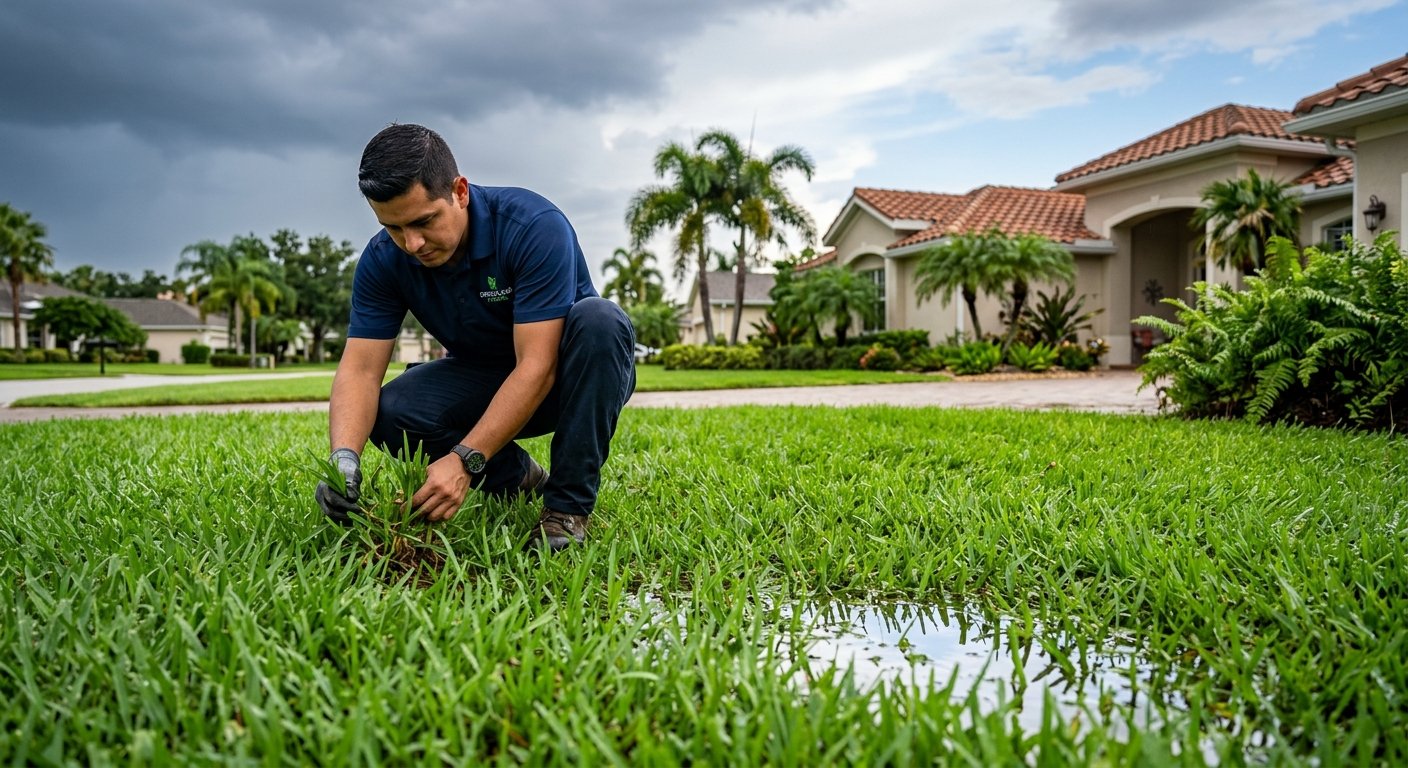
Florida’s rainy season—roughly June through September—means your lawn can grow several inches in a single week, turning a manageable yard into an overgrown mess almost overnight. To keep up, most Clearwater homeowners need to mow more frequently, adjust cutting height, and shift mowing to drier windows of the day. This guide explains exactly how to adapt your schedule so your turf stays healthy all season long.
- Florida’s rainy season drives explosive grass growth—weekly mowing often becomes insufficient and twice-weekly cuts may be needed.
- Never cut wet grass; mow in the morning after dew dries or before afternoon storms roll in.
- Raise your mower deck to avoid scalping and protect roots from fungal disease.
- Frequent rainfall creates prime conditions for brown patch disease and chinch bug outbreaks.
- Consistent, well-timed mowing is one of the best defenses against lawn disease in a Florida summer.
Why the Rainy Season Changes Everything
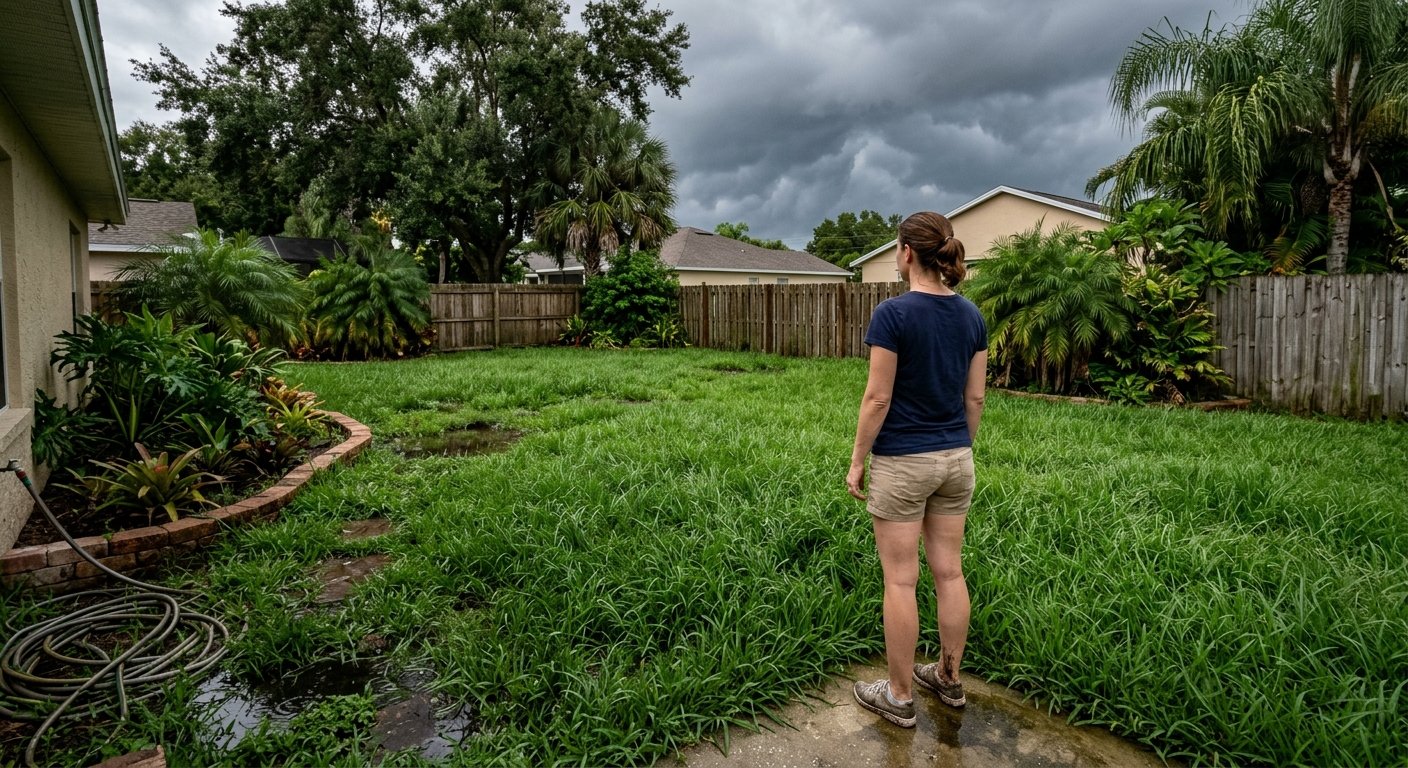
Pinellas County typically receives more than half of its annual rainfall between June and September, with afternoon thunderstorms arriving almost like clockwork. That surge of moisture, combined with Florida’s intense summer heat, pushes warm-season grasses like St. Augustine and Zoysia into overdrive. What needed cutting once a week in spring can look shaggy again just four or five days later.
The challenge isn’t just growth rate. Wet conditions change how you safely mow, when you can mow, and what settings you need on your equipment. Skipping even one mowing window can mean taking off too much blade at once—a practice known as scalping—which stresses the grass and leaves it vulnerable to disease. According to the University of Florida IFAS Extension, removing more than one-third of the blade height at a single mowing weakens turf and reduces its ability to recover from heat and drought stress.
Timing Your Mows Around Florida’s Afternoon Storms
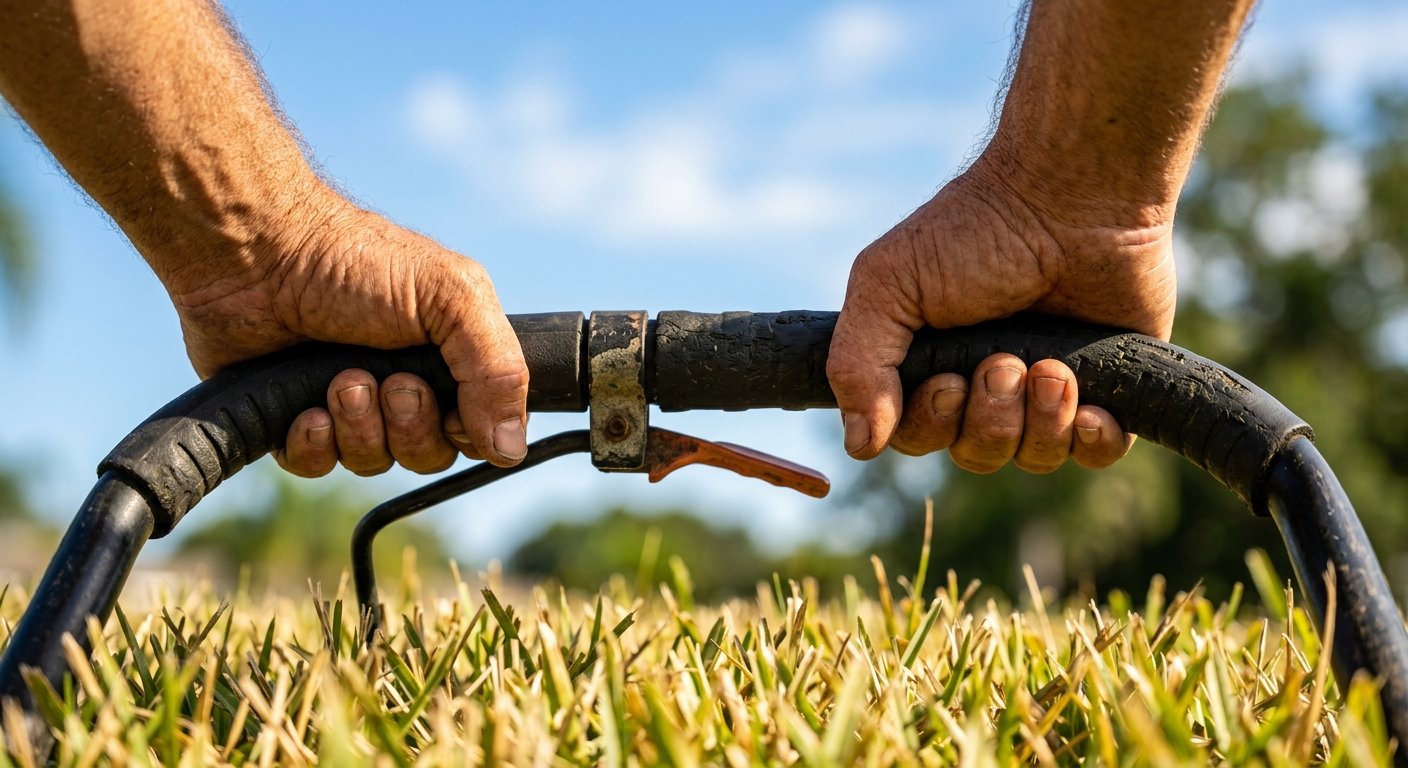
Anyone who has lived in Clearwater for more than one summer knows the pattern: sunny mornings, towering clouds by noon, and heavy rain by mid-afternoon. That rhythm actually gives you a workable daily window for mowing.
The Best Mowing Window
- Mid-morning (9–11 a.m.): Dew has had time to burn off, but storms haven’t arrived. Grass blades are dry and cut cleanly.
- Avoid early morning: Mowing wet grass tears rather than cuts, leaving ragged edges that invite fungal infection.
- Avoid late afternoon: Even if a storm misses you, mowing late in the day leaves fresh clippings and cut surfaces exposed overnight when fungal spores are most active.
If afternoon storms push your mowing window to the evening, let the clippings dry completely before you go back out—or better yet, wait until the next morning. Freshly cut grass mowed wet is one of the fastest ways to spread brown patch disease across your yard.
How Often Should You Mow During Rainy Season?
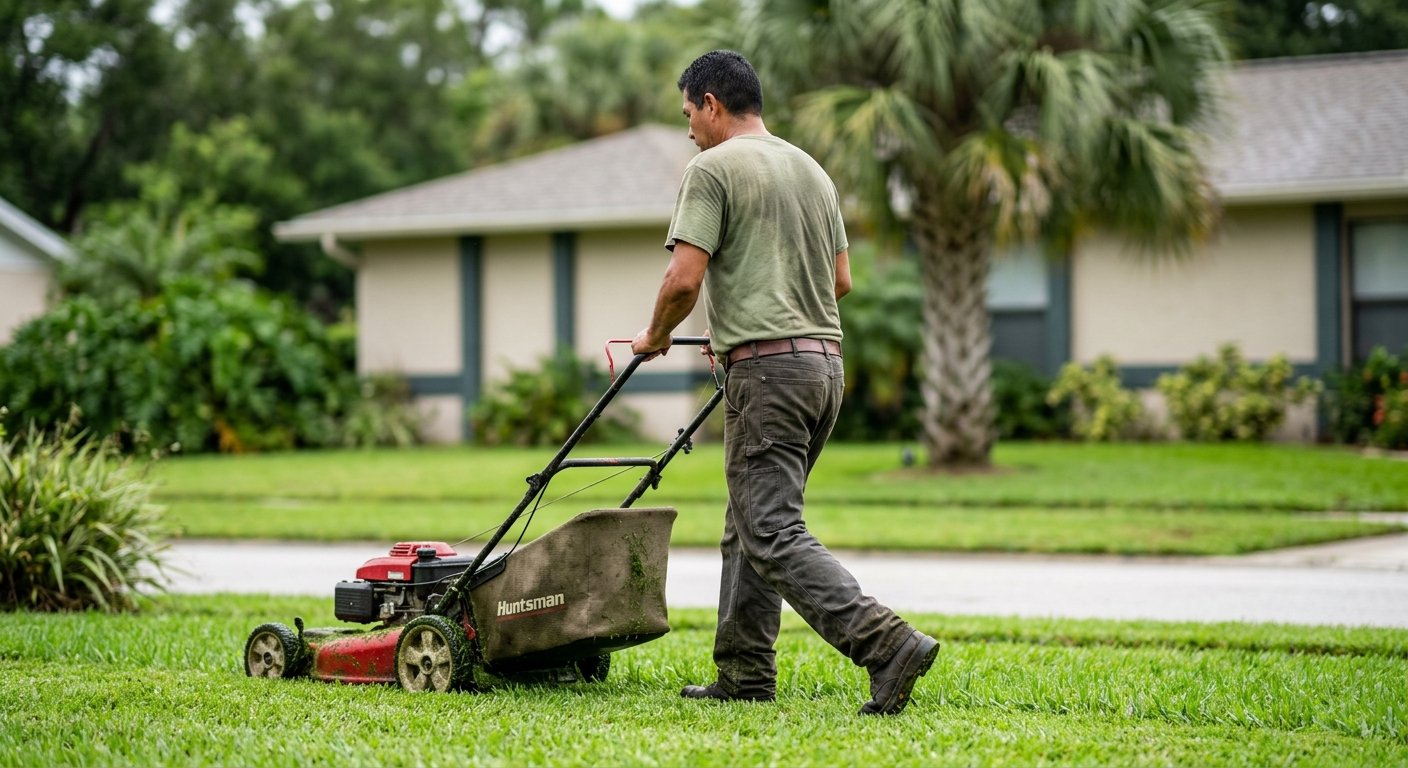
Standard residential lawn mowing in Florida follows a weekly schedule during cooler months, but rainy season often demands a shift. How aggressive you need to be depends on your grass type and how much rain actually fell that week.
| Grass Type | Dry Season Frequency | Rainy Season Frequency |
|---|---|---|
| St. Augustine | Every 7–10 days | Every 5–7 days |
| Zoysia | Every 7–14 days | Every 7 days |
| Bahia | Every 10–14 days | Every 7 days |
| Bermuda | Every 5–7 days | Every 4–5 days |
The goal is always the same: never remove more than one-third of the blade at once. If you fall behind and the grass is too tall, raise your deck height for the first pass and bring it back down gradually over the next two or three mowings. Trying to catch up all at once will do more damage than the overgrowth itself.
Deck Height Matters More Than You Think
A common mistake homeowners make is dropping the mower deck low in an attempt to buy a few extra days between mowing sessions. In Florida’s rainy season, this backfires. Cutting too low exposes the soil, raises soil temperature, and creates the exact stressed-turf conditions that chinch bugs love to exploit.
For St. Augustine grass—the dominant lawn variety across Clearwater and Belleair—the UF/IFAS recommended mowing height is 3.5 to 4 inches during summer. Bahia can go a bit shorter at 3 to 4 inches. Keeping turf on the taller end of its range shades the soil, retains moisture between rains, and naturally suppresses weed seed germination. It’s one of those counterintuitive lawn care truths: taller grass during the wet season often looks better and stays healthier than grass cut short.
Scalped or overly short turf during the rainy season is one of the primary triggers for brown patch disease outbreaks. Once brown patch takes hold in a humid Florida summer, recovery takes weeks—and the damage is often visible well into fall.
Rainy Season Pest and Disease Pressure
High humidity and frequent rainfall create textbook conditions for two of the most common lawn problems in Pinellas County: brown patch fungal disease and chinch bug infestations. Understanding the connection between your mowing habits and these threats is essential to keeping your lawn looking its best.
Brown Patch Disease
Brown patch (caused by Rhizoctonia solani) thrives when nighttime temperatures stay above 70°F and grass stays wet overnight—exactly what a Florida rainy season delivers. Mowing wet grass spreads the fungal spores across your lawn. Keeping your mower blades sharp (dull blades shred grass and create larger wound surfaces) and timing mows for dry conditions significantly reduces your exposure. If you notice circular brown patches appearing, it’s worth consulting a lawn care professional before the problem expands.
Chinch Bug Outbreaks
Chinch bugs love hot, dry microclimates—which sounds counterintuitive during rainy season. But areas of the lawn that drain quickly, get full sun all day, or are cut too short can dry out fast even in summer. Those stressed patches become chinch bug hotspots. Proper mowing height and consistent scheduling help eliminate the conditions these pests prefer.
The Florida Department of Agriculture and Consumer Services provides current pest and disease information relevant to Florida lawn care that homeowners can reference when scouting for problems.
Consistent mowing at the right height and time of day is one of the most powerful tools you have against lawn disease in a Florida summer.
Managing Clippings During the Wet Season
During rainy season, grass clippings are wetter, heavier, and more likely to clump. Thick clumps sitting on the lawn block sunlight and trap moisture against the soil—perfect conditions for fungal growth. Here’s how to handle them:
- Mow when grass is dry to produce lighter, more dispersed clippings.
- If clumps form, disperse them with a rake or a second dry pass with the mower on a higher setting.
- Mulching mowers work well for fine clippings; they break down quickly and return nutrients to the soil.
- Never leave heavy clippings bunched against the base of the grass—bag them instead during periods of very rapid growth.
Homes near Clearwater Beach and the Gulf shoreline face an added challenge: salt spray carried inland by summer storms can accumulate on grass blades. Rinsing the lawn lightly after a storm that comes with strong onshore winds helps reduce salt damage, especially on the edges of the property closest to the water.
When DIY Mowing Becomes Overwhelming
For many homeowners and small business owners in Clearwater and Belleair, keeping up with a rainy-season mowing schedule while managing work and family is genuinely difficult. A two-week vacation or a few back-to-back storms can push a lawn from tidy to unmanageable fast. That’s where a reliable weekly lawn mowing service makes a real difference—not just for appearance, but for the long-term health of your turf.
Our team at Schwahn’s Lawns understands the specific rhythms of Pinellas County summers. We know which neighborhoods get hit hardest by afternoon storms, which grass varieties need the most attention during humid stretches, and how to keep your property looking sharp even when the weather won’t cooperate. If you’ve been searching for dependable clearwater lawn maintenance that adapts to Florida’s actual seasons rather than a generic national schedule, that local knowledge is exactly what separates us from larger providers. You can learn more about how we serve the community through our Clearwater lawn care page, our dedicated Belleair lawn care services, and our full lawn mowing service overview.
Frequently Asked Questions
How often should I mow my lawn during Florida’s rainy season?
Most Clearwater lawns need mowing every five to seven days during peak rainy season rather than the standard weekly schedule. St. Augustine and Bermuda grass in particular grow rapidly with consistent rainfall and heat. The best rule of thumb is to mow before grass exceeds the one-third rule—never remove more than one-third of the blade height at a single mowing.
Is it okay to mow wet grass after a rainstorm?
It’s best to wait until the grass blades have dried, typically a few hours after rain stops. Mowing wet grass tears the blades rather than cutting them cleanly, spreads fungal disease spores across the lawn, and causes clippings to clump heavily. Aim for mid-morning mowing after the dew and any overnight rain has dried.
What mowing height should I use for St. Augustine grass in summer?
UF/IFAS recommends keeping St. Augustine grass at 3.5 to 4 inches during Florida’s hot, humid summer months. This height shades the soil, reduces moisture loss between rains, and helps suppress weeds naturally. Cutting shorter during rainy season creates stress conditions that attract chinch bugs and increase disease vulnerability.
Can my mowing schedule help prevent brown patch disease?
Yes—timing and technique both matter. Mowing in the morning when grass is dry prevents spreading fungal spores, and maintaining proper blade height keeps turf healthy enough to resist infection. Sharp mower blades also reduce the size of cut wounds on grass, which are entry points for fungal pathogens like Rhizoctonia solani.
What should I do if I miss a week of mowing during rainy season?
Raise your mower deck to remove only the top portion of the overgrown grass—never try to cut it all the way back to the normal height in one pass. Gradually lower the deck over two or three successive mowings until you’re back to the correct height. Cutting too aggressively after a missed week is a leading cause of scalping damage and disease outbreaks.
Ready for a Lawn That Handles Florida Summers?
Reach out to Schwahn’s Lawns and let our local Pinellas County team build a mowing schedule that actually fits the way Florida summers work.
About Schwahn's Lawns
Schwahn's Lawns provides expert lawn care services to homeowners and businesses throughout Clearwater and Pinellas County, Florida. With deep knowledge of Florida's unique climate challenges—from chinch bugs and brown patch disease to salt damage and hurricane preparation—they serve as trusted local partners rather than transactional vendors. Their approach emphasizes educational support and personalized care that larger national competitors cannot match, helping property owners achieve beautiful outdoor spaces they can take pride in. Visit schwahnslawns.com →