
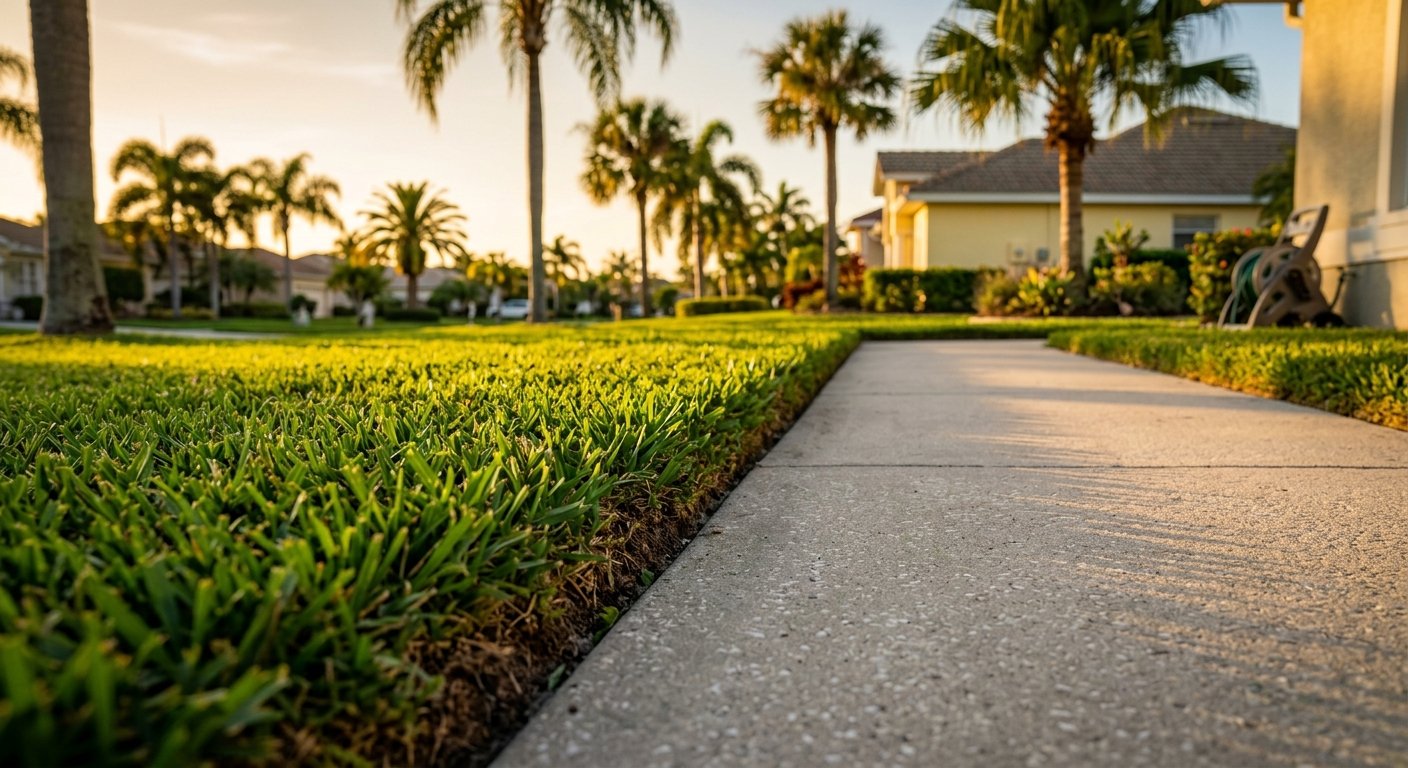
In Clearwater and across Pinellas County, most lawns need edging every 1–2 weeks from March through October, and every 2–4 weeks from November through February. Florida’s warm-season grasses—St. Augustine and Zoysia—grow aggressively year-round, creeping over driveways and sidewalks faster than lawns in northern states. Irrigation systems, fertilization, and Gulf-coast salt air can push that schedule toward the more frequent end.
- Peak season (March–October): edge every 1–2 weeks; cooler months (November–February): every 2–4 weeks.
- St. Augustine spreads via surface runners and needs the more frequent end of that range; Zoysia is slightly more forgiving.
- A dedicated rotary or stick edger produces cleaner, longer-lasting results than a string trimmer used along hardscapes.
- Overgrown edges increase chinch bug hiding cover and create moisture conditions that favor brown patch disease.
- During six months of peak season, DIY edging on a typical Clearwater lot adds up to 12–24 hours of outdoor work in Florida heat.
Why Florida Lawns Need More Frequent Edging
Florida doesn’t follow the traditional four-season rulebook, and your lawn edging schedule shouldn’t either. Unlike lawns in northern states that essentially go dormant in winter, Florida grass—especially St. Augustine and Zoysia, the most common varieties in Clearwater—grows aggressively for much of the year.
According to the University of Florida IFAS Extension, warm-season grasses in Florida can actively grow nearly year-round in South and Central Florida, with only a modest slowdown between December and February. That means grass doesn’t just grow upward—it spreads laterally, creeping over sidewalks, driveways, and landscape beds with impressive determination.
Salt air from the Gulf of Mexico adds another layer. Coastal properties in Clearwater and Belleair see grass that sometimes grows unevenly or shows stress near edges, making consistent maintenance even more important for a polished appearance.
The General Edging Schedule for Clearwater Yards
There’s no one-size-fits-all answer, but here’s a practical framework based on Florida’s climate rhythm:
Peak Growing Season: March Through October
This is when your lawn is working hardest. Warm temperatures, regular afternoon rain showers, and long daylight hours send St. Augustine and Zoysia grass into overdrive. During this stretch, most Clearwater homeowners benefit from edging every 1 to 2 weeks.
Skipping edging for three or four weeks during summer is where things unravel quickly. Grass creeps over hardscapes, roots establish in cracks, and what would have been a 15-minute touch-up becomes an hour-long project. Staying on a consistent schedule during peak season is the single most effective strategy for maintaining that clean, finished look.
Staying on a consistent schedule during peak season is the single most effective strategy for maintaining that clean, finished look.
Cooler Months: November Through February
Growth slows noticeably, though it doesn’t stop entirely in Pinellas County’s mild winters. During these months, edging every 2 to 4 weeks is typically sufficient for most residential properties. You’ll still want to stay consistent—a warm snap in January can trigger a surprising growth spurt—but the pressure eases compared to summer.
This is also a good window for addressing problem areas, cleaning up rough edges near landscape beds, and preparing your lawn’s perimeter for the coming growing season.
Factors That Affect How Often You Should Edge
Your neighbor’s lawn and your lawn may need entirely different schedules. Here are the variables that matter most:
- Grass type: St. Augustine spreads aggressively through stolons and tends to creep over edges faster than Zoysia, which grows more slowly and densely.
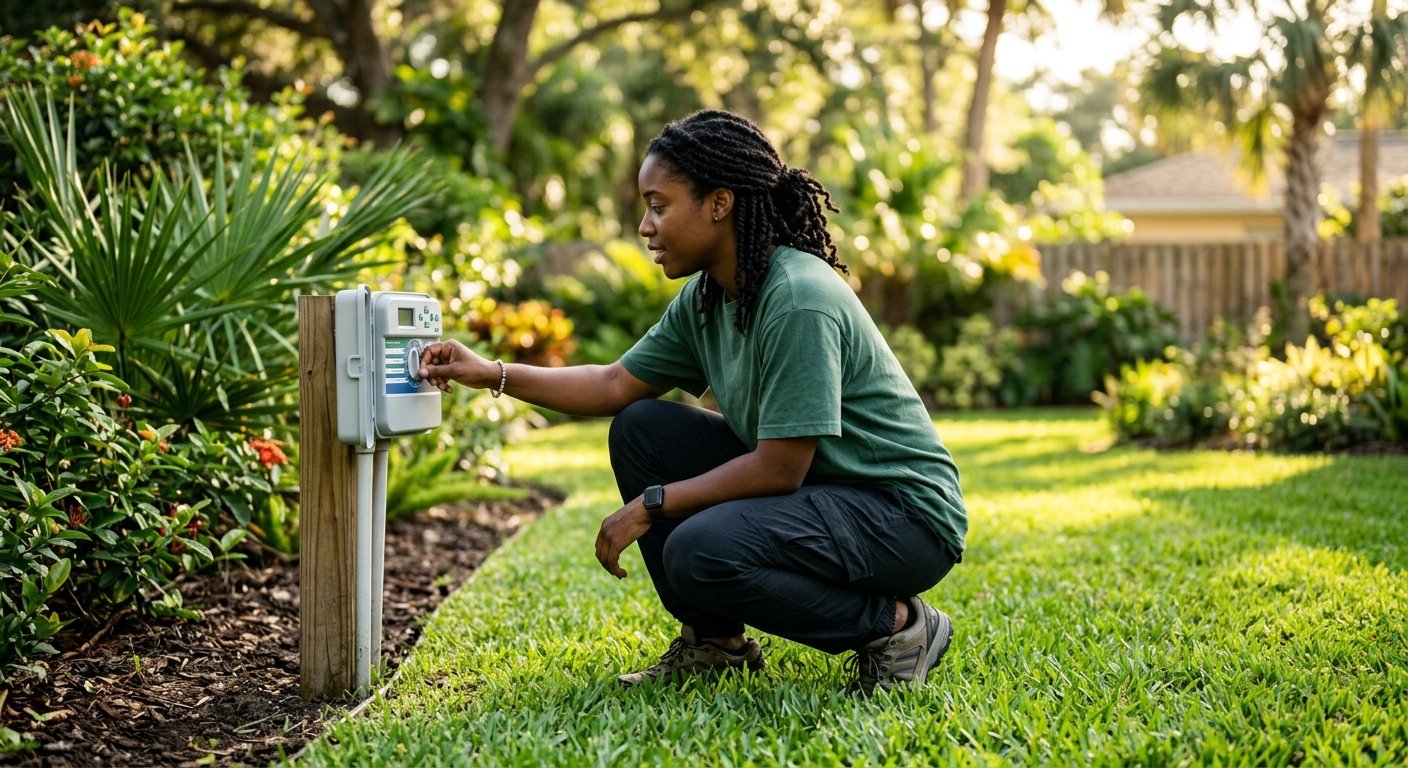
- Irrigation: Yards on automatic irrigation systems with frequent watering schedules grow faster and need more frequent edging attention.
- Sunlight exposure: Full-sun yards in direct Gulf-facing locations may grow faster than shaded properties.
- Proximity to hardscapes: Driveways, sidewalks, and landscape borders catch and hold heat, often accelerating edge growth in those specific zones.
- Recent fertilization: After a fertilizer application, give it two to three weeks and your edges will tell you it’s past time to schedule a visit.
After any fertilizer application, plan an edging visit two to three weeks out—don’t wait until you can see the overgrowth. Scheduling ahead keeps you from falling into the catch-up cycle that stresses turf along your hardscape borders.
The Right Tools Make a Real Difference
Edging isn’t just running a string trimmer along the grass line. There’s an important distinction between edging and trimming, and using the wrong tool produces noticeably different results.
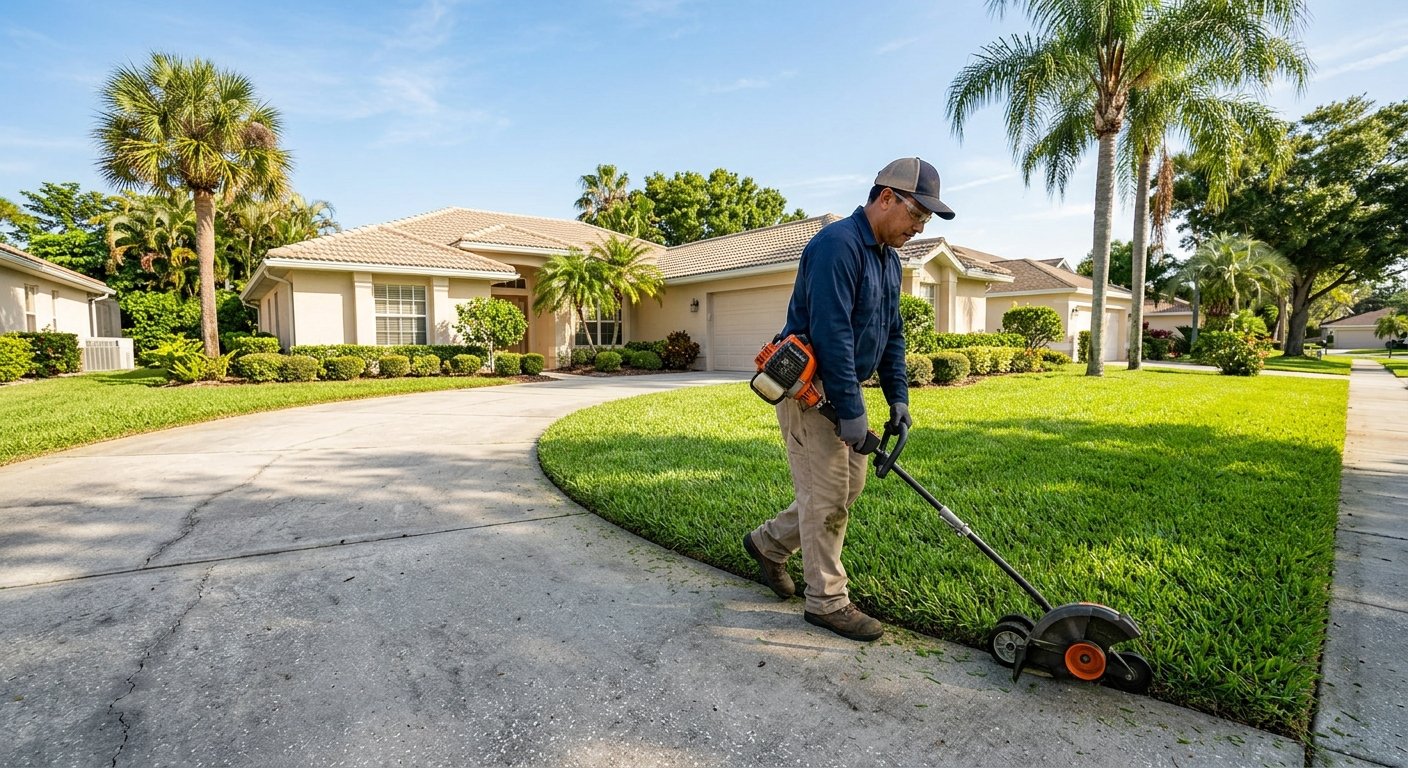
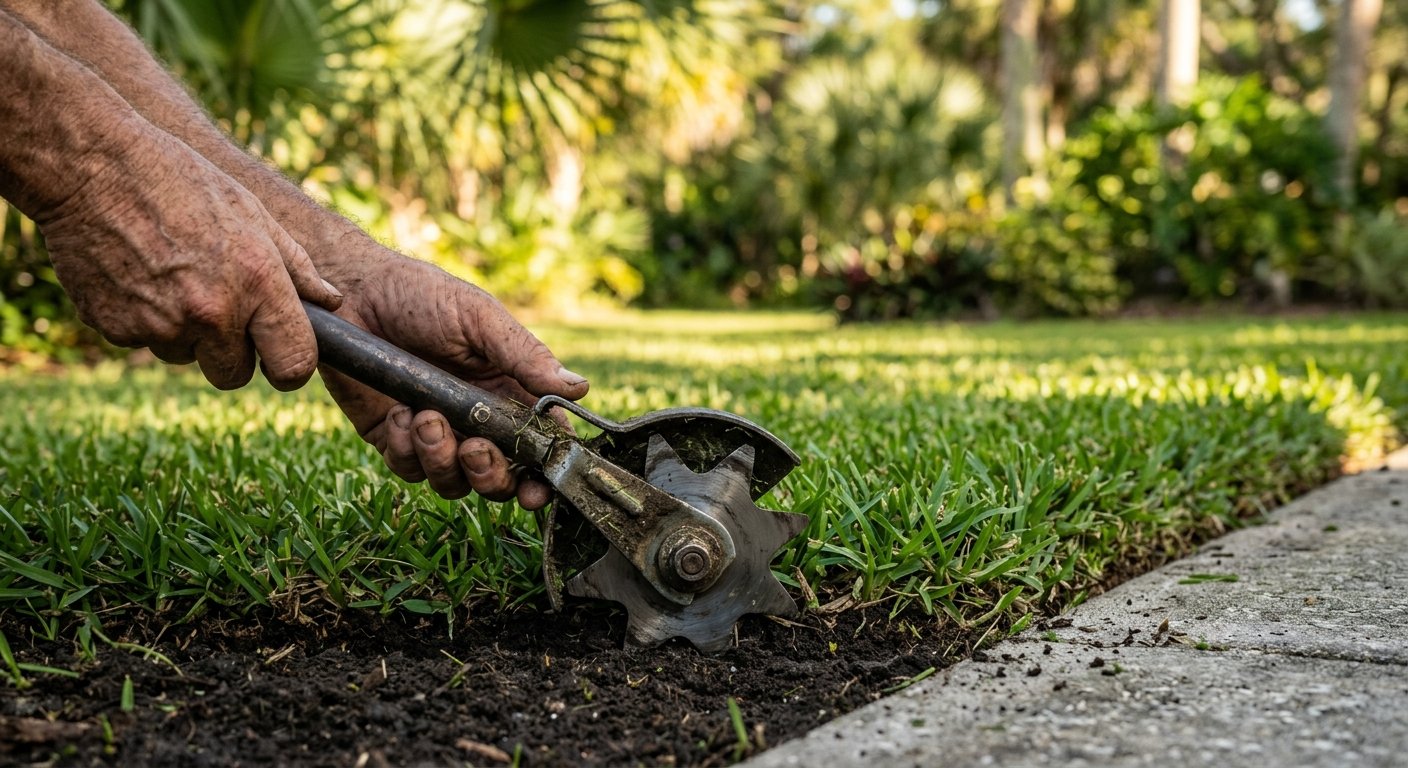
A dedicated rotary edger or stick edger cuts a clean vertical line between turf and hardscape—the sharp, defined border that gives your property its finished look. String trimmers are better suited for cutting around obstacles—mailboxes, trees, fence lines—where rigid edgers can’t reach.
| What to compare | Rotary / Stick Edger | String Trimmer |
|---|---|---|
| Best use | Clean vertical cuts along driveways & sidewalks | Trimming around mailboxes, trees, fence lines |
| Edge result | Sharp, defined vertical border | Angled bevel that widens over time |
| Long-term effect | Easier to maintain; slows grass migration | Grass migrates back onto concrete faster |
| Suitable for hardscapes | Yes — purpose-built | Acceptable short-term only |
Using a string trimmer to edge along a driveway might look acceptable for a week or two, but over time it bevels the edge at an angle, making it harder to maintain and easier for grass to migrate back onto the concrete. Professional lawn edging and trimming service uses the right equipment for each specific task, which is one reason professional results tend to hold up longer between visits.
What Happens When You Fall Behind
Life gets busy. But there are real consequences to letting edging slide for an extended period—especially during peak Florida growing season. Overgrown edges allow St. Augustine to establish runners deep into sidewalk cracks and mulch beds. Reclaiming those edges requires more aggressive cutting, which can temporarily leave the perimeter looking scalped or uneven. Repeated neglect and recovery cycles stress the grass in those zones and create irregular growth patterns that take several mowing cycles to normalize.
Consistent Clearwater lawn maintenance—even if it’s just professional visits every two weeks during summer—is far easier on your lawn, your curb appeal, and your budget than periodic catch-up sessions.
Edging and Florida’s Pest Realities
There’s a meaningful connection between edging frequency and two of Florida’s most common lawn problems: chinch bugs and brown patch disease.
Chinch bugs in St. Augustine grass tend to concentrate along hot edges—driveways, sidewalks, and south-facing borders where heat accumulates. Keeping edges cleanly trimmed improves airflow and makes early pest activity easier to spot. Thick, overgrown edge grass creates ideal hiding conditions for chinch bug colonies to grow before homeowners notice the damage.
Brown patch disease, caused by the fungus Rhizoctonia solani, thrives in overly moist, dense turf. Overgrown edges retain more moisture and reduce airflow—conditions that favor fungal spread. The EPA’s WaterSense program notes that overwatering combined with poor turf maintenance significantly increases disease pressure in warm-season lawns—something Florida homeowners along the Gulf know well.
Routine edging is part of a healthy, proactive lawn care approach, not just a cosmetic one.
DIY vs. Professional Edging: A Practical Comparison
Many homeowners start with DIY edging and eventually make the switch to professional service. The turning point is usually the same: the time investment during Florida’s summer growing season no longer matches their schedule.
During peak season, edging every two weeks across a typical Clearwater residential lot takes 30 to 60 minutes when done correctly—including cleanup. Over six months of peak season, that’s 12 to 24 hours of physical outdoor work in Florida heat and humidity. For homeowners who’d rather spend weekends with family or simply enjoy their yard, professional service quickly becomes the practical choice.
Beyond time, professional residential lawn care Clearwater teams bring calibrated equipment, consistent technique, and experienced eyes that catch developing problems early. Our team at Schwahn’s Lawns notices early signs of chinch bug damage or brown patch while edging—before homeowners even know to look. That local expertise is something larger national lawn services typically can’t replicate.
If you’re searching for a professional lawn edging service in the Clearwater or Belleair area, our lawn care Clearwater FL page is a great starting point to learn more about what consistent service looks like for your specific property.
Frequently Asked Questions
How often should I edge my lawn in Clearwater, Florida?
During the peak growing season (March through October), most Clearwater lawns benefit from edging every 1 to 2 weeks. During cooler months (November through February), every 2 to 4 weeks is typically sufficient. Properties with irrigation systems or St. Augustine grass may need the more frequent end of that range.
Is edging the same as trimming?
No—they’re different tasks using different tools. Edging creates clean vertical cuts along hard borders like driveways and sidewalks. Trimming uses a string trimmer to cut grass around obstacles where a mower can’t reach. Both are important parts of a complete lawn maintenance routine.
Can skipping edging damage my lawn?
It won’t kill your grass, but persistent neglect leads to overgrown runners that establish in sidewalk cracks and mulch beds. Reclaiming those edges requires aggressive cutting that can temporarily stress the turf and leave irregular growth patterns that take time to even out.
Does Gulf salt air affect how often I need to edge?
Coastal properties in Clearwater and Belleair may see uneven growth patterns near edges due to salt stress, particularly after tropical weather events. Consistent edging helps you monitor those stressed zones and address issues before they spread across the lawn.
What grass types are most common in Clearwater and how do they affect edging frequency?
St. Augustine is the most prevalent grass in Pinellas County and spreads aggressively through surface runners, requiring edging every 1 to 2 weeks during summer. Zoysia grows more densely but more slowly, making it slightly more forgiving. Knowing your grass type helps you dial in the right schedule.
The Bottom Line
Clean edges aren’t a luxury—they’re the finishing touch that makes every other part of your lawn look intentional and cared for. In Clearwater and across Pinellas County, Florida’s climate means that maintaining those edges is an ongoing commitment, not a once-a-month afterthought. Whether you’re ready to hand it off to a trusted local team or just looking for a better system for your DIY routine, the team at Schwahn’s Lawns knows these yards, these grasses, and these Florida summers—because we work in them every week.
Ready for crisp edges every visit?
Reach out today and let’s build a consistent edging schedule tailored to your Clearwater or Belleair property.

About Schwahn's Lawns
Schwahn's Lawns provides expert lawn care services to homeowners and businesses throughout Clearwater and Pinellas County, Florida. With deep knowledge of Florida's unique climate challenges—from chinch bugs and brown patch disease to salt damage and hurricane preparation—they serve as trusted local partners rather than transactional vendors. Their approach emphasizes educational support and personalized care that larger national competitors cannot match, helping property owners achieve beautiful outdoor spaces they can take pride in. Visit schwahnslawns.com →