
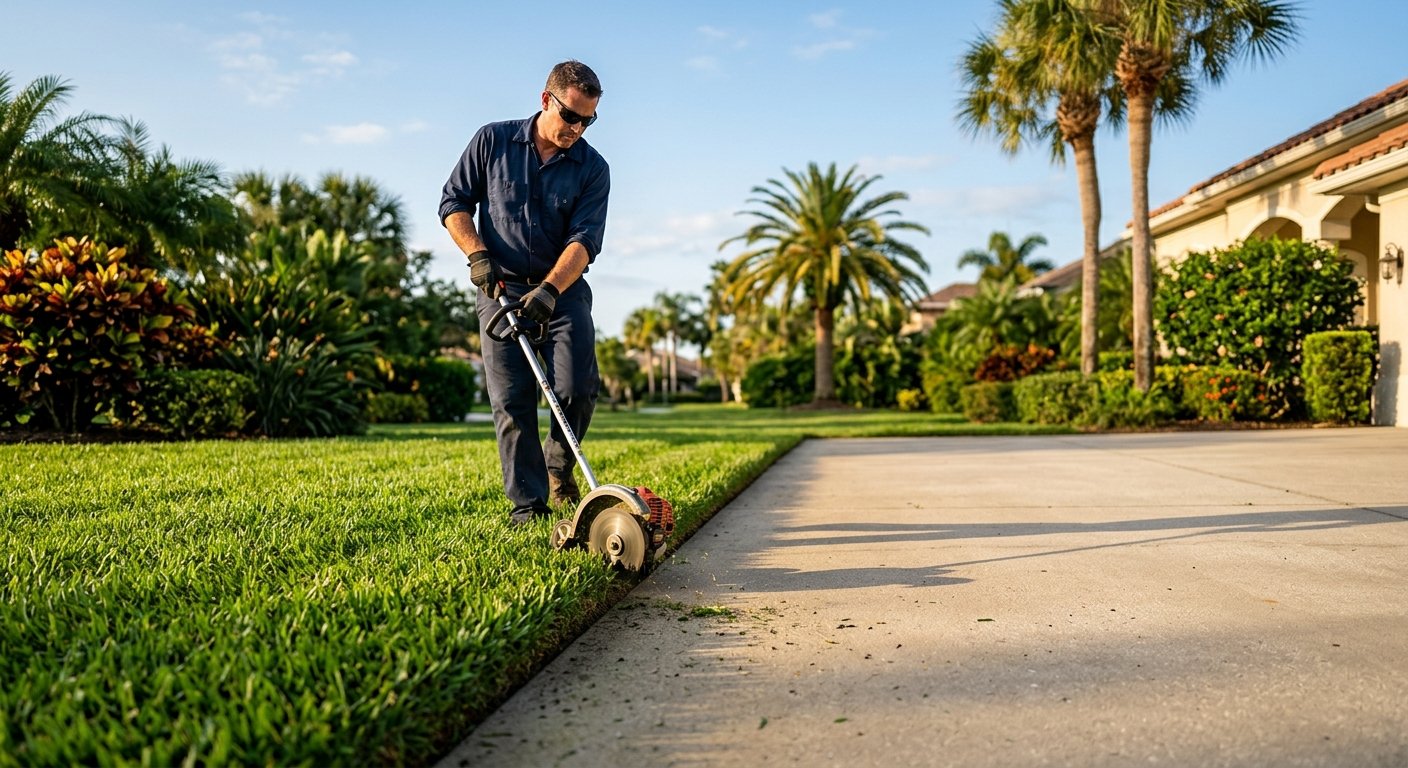
Clean, well-defined lawn edges make an immediate visual difference for any Belleair property. Edging separates turf from driveways, walkways, and garden beds with a crisp line that signals a well-cared-for home. For Florida lawns—especially St. Augustine and Zoysia grass common throughout Pinellas County—regular edging also prevents aggressive lateral spread that can overwhelm landscape beds and hardscape surfaces.
- Edging is not just cosmetic—it controls how Florida’s aggressive turf grasses spread and protects landscape beds.
- Belleair’s Gulf proximity means salt-spray stress can weaken grass edges, making clean cuts more important for turf health.
- Frequency matters: most Pinellas County lawns benefit from edging every two to three weeks during the active growing season.
- The right technique differs between hard borders (driveways, curbs) and soft borders (mulch beds, garden areas).
- Professional edging paired with consistent trimming produces results that DIY equipment rarely matches over time.
Why Edging Matters More in Florida Than Most Realize
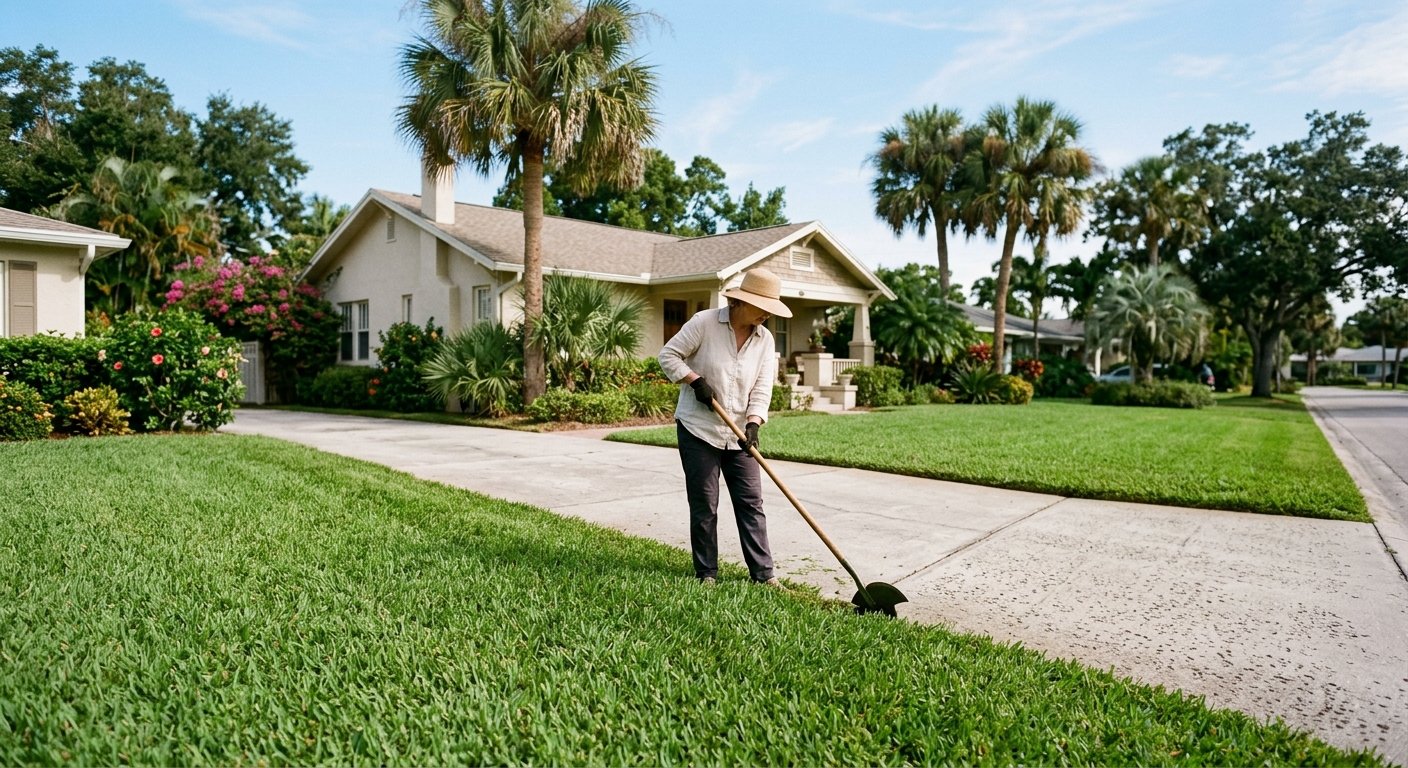
Belleair sits close enough to the Gulf that salt-laden air regularly settles on lawns, weakening turf along exposed edges and making grass more vulnerable to disease and pest pressure. But the bigger challenge is biological: Florida’s warm-season grasses—particularly St. Augustine, which dominates most Pinellas County yards—are horizontal growers. Stolons creep outward constantly during Florida’s long growing season, which runs from roughly March through November.
Without regular edging, those stolons invade mulch beds, push under pavers, and create uneven borders that look unkempt even when the rest of the lawn is mowed. Beyond aesthetics, encroachment into landscape beds holds moisture against plant stems, creating ideal conditions for brown patch disease and other fungal issues that are already common in Florida’s humid climate.
Belleair’s mature tree canopy and established landscape beds make precise edge maintenance especially important. Overgrown turf edges trap debris and moisture against tree roots and garden plantings, accelerating disease pressure during Florida’s rainy season (June through September).
The University of Florida IFAS Extension notes that St. Augustine grass spreads aggressively via stolons and requires consistent management to prevent it from overtaking non-turf areas. That’s not an exaggeration—left unedged for a full season, a St. Augustine lawn can push inches into adjacent beds. For homeowners who’ve invested in well-designed landscapes, that kind of encroachment undoes a lot of careful planting.
Hard Borders vs. Soft Borders: Using the Right Technique
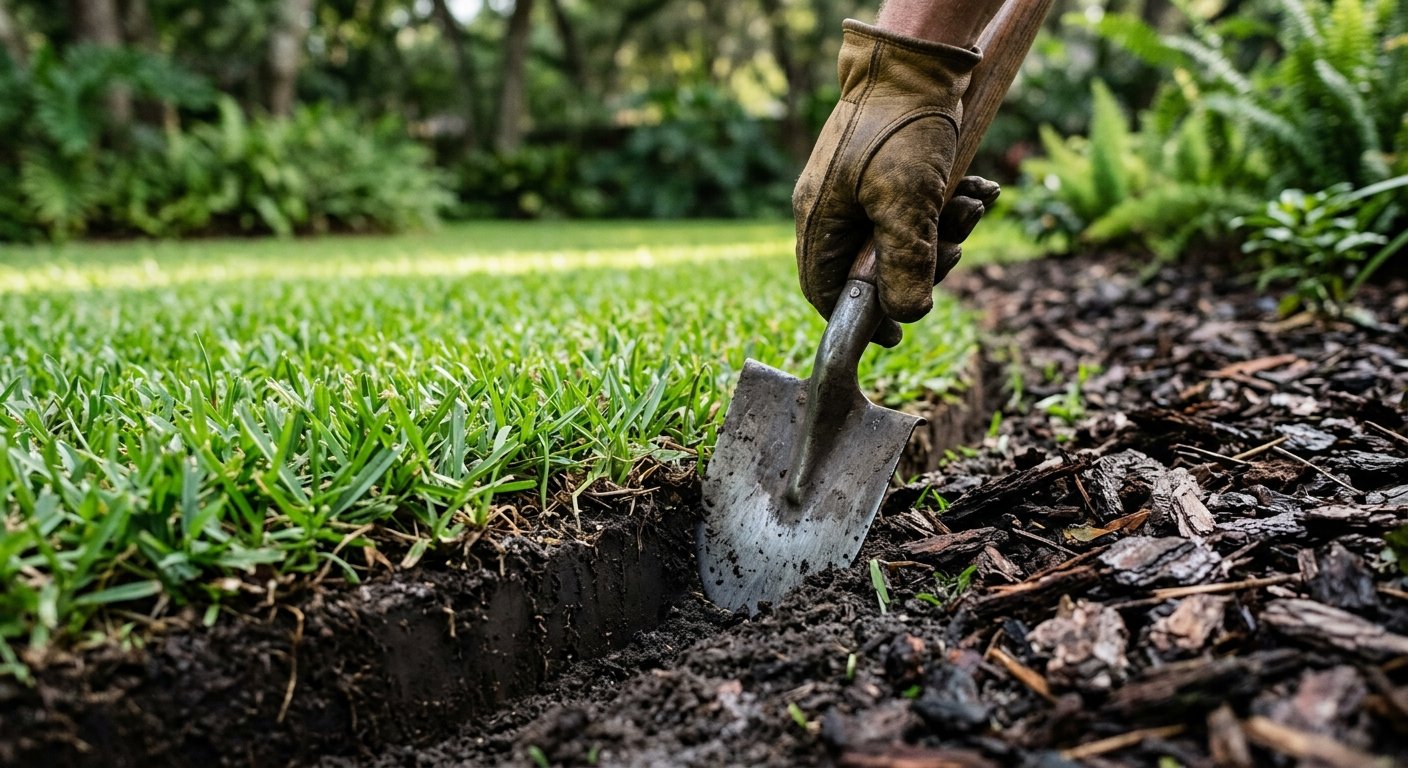
Not all lawn edges are the same, and the approach should vary based on what the grass is growing against. Understanding the difference helps you get cleaner results and avoid damaging your hardscape or plant beds.
| Border Type | Hard Border (Driveways, Curbs, Sidewalks) | Soft Border (Mulch Beds, Garden Areas) |
|---|---|---|
| Best tool | Rotary edger or stick edger | Spade edger or half-moon edger |
| Cut angle | Vertical, straight down along the seam | Slight inward angle to create a defined trench |
| Frequency | Every 2–3 weeks during growing season | Monthly or as mulch shifts |
| Common mistake | Drifting away from the seam, leaving uneven lines | Cutting too shallow, allowing quick re-encroachment |
For hard borders along Belleair’s driveways and walkways, a stick edger or rotary edger produces a clean vertical cut that stays defined between visits. For mulch beds—especially common in Belleair’s mature, landscaped properties—creating a shallow trench at the turf line physically discourages stolons from crossing. That trench needs to be re-cut as it fills with debris and new growth.
How Often Should Belleair Lawns Be Edged?
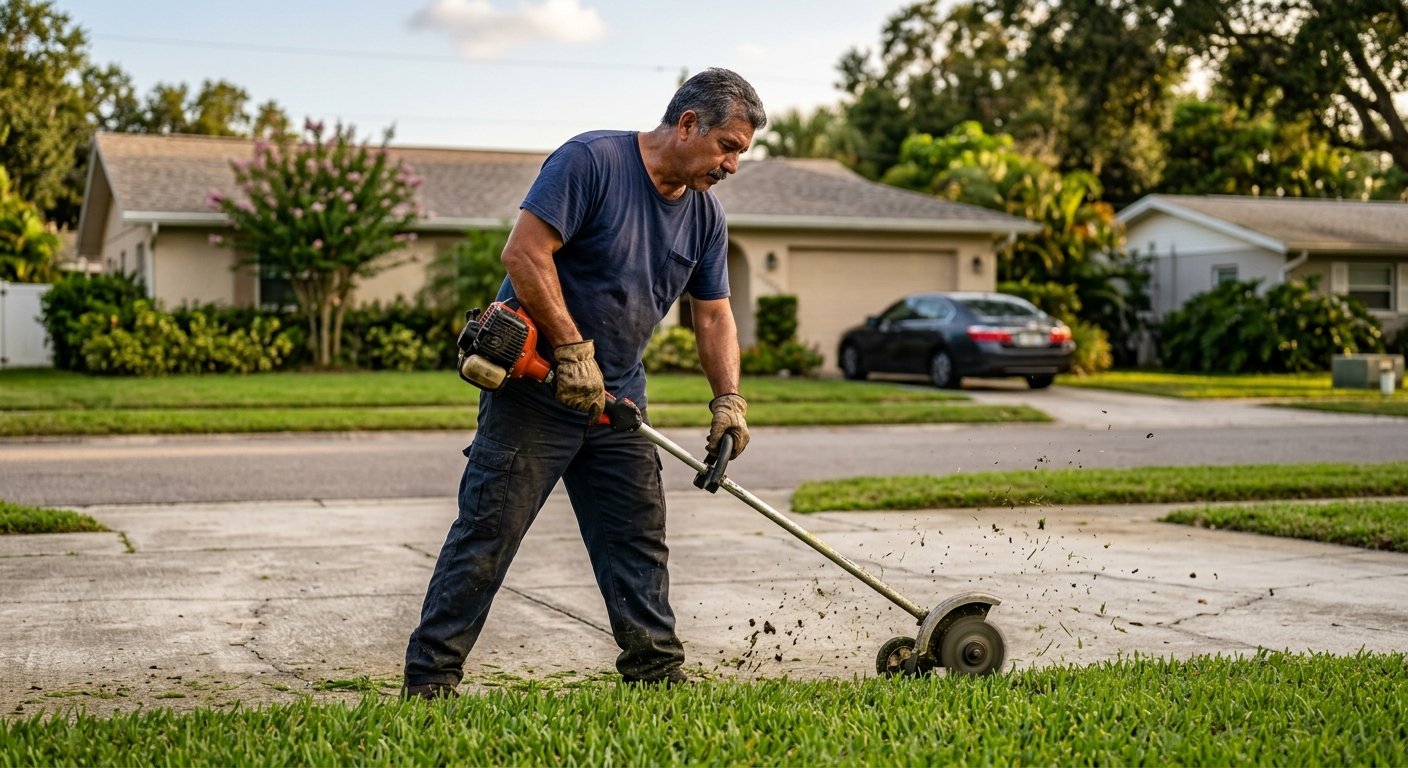
Florida’s growing season is far longer than what most national lawn care guides assume. Generic advice written for northern lawns simply doesn’t translate here. During the warm months from late March through October, most Belleair lawns need edging every two to three weeks to stay sharp. As growth slows in the cooler months of November through February, monthly edging often suffices—though St. Augustine can stay active even then during mild winters.
Florida’s long growing season means edging is a recurring discipline, not a once-a-season chore.
Skipping edging during the rainy season is one of the most common mistakes Pinellas County homeowners make. June through September brings frequent afternoon storms that accelerate turf growth dramatically. Missing two or three edging cycles during this stretch can set back the definition of your borders by weeks, requiring heavier corrective work later.
After edging, blow or sweep clippings away from the freshly cut edge rather than letting them settle back into the trench or onto mulch. Leaving clippings on mulch beds can introduce turf material that re-roots, especially with St. Augustine grass’s strong stolon growth habit.
Trimming: The Partner to Good Edging
Edging handles borders—trimming handles everything in between that the mower misses. Around tree bases, fence lines, utility covers, and signage, a string trimmer reaches where mower blades can’t. In Belleair, where mature trees and established landscaping are common on many residential lots, thorough trimming is just as visible as edging.
The technique matters here too. Running a trimmer at the wrong angle scalps grass and creates brown, patchy zones that are difficult to recover—especially during dry stretches or after salt-spray events near the Gulf. Holding the trimmer head parallel to the ground and moving steadily produces an even cut without tearing turf crowns. For more on professional trimming practices that complement edging, our lawn edging and trimming service page covers the full process we use across Pinellas County properties.
Salt Damage and Gulf Proximity: A Belleair-Specific Challenge
Properties within Belleair’s neighborhoods closest to the Gulf face a challenge that homeowners in inland communities don’t—ongoing salt exposure from wind and spray. Salt accumulation weakens grass blades and makes turf more susceptible to mechanical damage from edging and trimming equipment. Grass that’s already salt-stressed doesn’t recover from a rough cut as quickly as healthy turf.
The practical implication: sharp blades matter even more here. Dull edger blades and worn trimmer lines tear rather than cut, leaving ragged grass edges that turn brown and invite disease. Florida horticulture research consistently shows that clean cuts from sharp equipment reduce stress and recovery time in warm-season turf. Keeping equipment maintained—or having a professional team that maintains theirs—directly affects how well your lawn bounces back.
When Professional Edging Makes the Difference
There’s a genuine gap between what a homeowner with a consumer-grade edger can achieve and what trained professionals produce consistently. It’s not about effort—it’s about equipment quality, technique refinement, and showing up on the right schedule regardless of what else is happening that week.
Initial edge establishment
On overgrown or recently neglected borders, the first professional edging session resets the line and removes accumulated lateral growth. This often takes more time and care than routine maintenance visits.
Consistent scheduled maintenance
Following up every two to three weeks during the growing season keeps edges sharp and prevents the labor-intensive restoration work that comes with skipped visits.
Seasonal adjustment
As Florida’s growth cycle slows in cooler months, professional crews adjust frequency and technique—avoiding over-cutting dormant or semi-dormant turf that can’t recover quickly.
Integrated lawn observation
A professional team visiting regularly will notice early signs of chinch bug activity, brown patch emergence, or salt damage along turf edges—catching problems before they spread.
For Belleair homeowners considering a switch from DIY maintenance or looking for more reliable professional lawn maintenance in Belleair FL, our team understands the specific challenges this community presents. You can also learn more about our comprehensive approach through our Belleair lawn care services page and our broader Clearwater lawn care services for neighboring areas throughout Pinellas County.
Frequently Asked Questions
How is edging different from trimming?
Edging creates a defined boundary between turf and hard or soft surfaces—driveways, walkways, and landscape beds. Trimming uses a string trimmer to cut grass in areas a mower can’t reach, like around trees, fences, and posts. Both are necessary for a polished-looking lawn, and they work together rather than substituting for each other.
Can I edge too often or too aggressively?
Yes. Over-edging along soft borders can widen the trench too far over time, cutting into mulch beds or destabilizing the soil boundary. For hard borders, the risk is drift—gradually cutting further from the original line. The goal is maintenance cuts that reinforce an established edge, not progressively deeper removal each visit.
Why does my lawn edge look ragged after I edge it myself?
The most common cause is a dull blade or worn trimmer line. Dull equipment tears turf rather than cutting cleanly, leaving brown, frayed edges that take longer to recover. Florida’s warm-season grasses need sharp, clean cuts—especially St. Augustine, which is prone to tip browning when torn. Check and replace equipment consumables regularly.
Does edging help with chinch bugs or lawn disease?
Edging doesn’t directly control pests or disease, but it contributes to overall turf health. Clean borders improve airflow around turf margins and reduce the debris accumulation where pests and fungal issues often originate. A professional team edging your lawn regularly will also spot early warning signs of chinch bug activity or brown patch along turf edges before problems escalate.
How do I find a reliable professional lawn edging service near me in Belleair?
Look for a team with demonstrated knowledge of Florida’s specific turf varieties and local conditions—Gulf-area salt exposure, rainy season growth patterns, and the aggressive spread of St. Augustine grass. A provider who schedules consistently and communicates proactively is more valuable than one offering the lowest one-time price. Local knowledge and reliability matter far more than national brand recognition.
Ready for Crisp, Clean Edges on Your Belleair Lawn?
Reach out to Schwahn’s Lawns and let our Pinellas County lawn care team establish and maintain the sharp, defined edges your property deserves.

About Schwahn's Lawns
Schwahn's Lawns provides expert lawn care services to homeowners and businesses throughout Clearwater and Pinellas County, Florida. With deep knowledge of Florida's unique climate challenges—from chinch bugs and brown patch disease to salt damage and hurricane preparation—they serve as trusted local partners rather than transactional vendors. Their approach emphasizes educational support and personalized care that larger national competitors cannot match, helping property owners achieve beautiful outdoor spaces they can take pride in. Visit schwahnslawns.com →