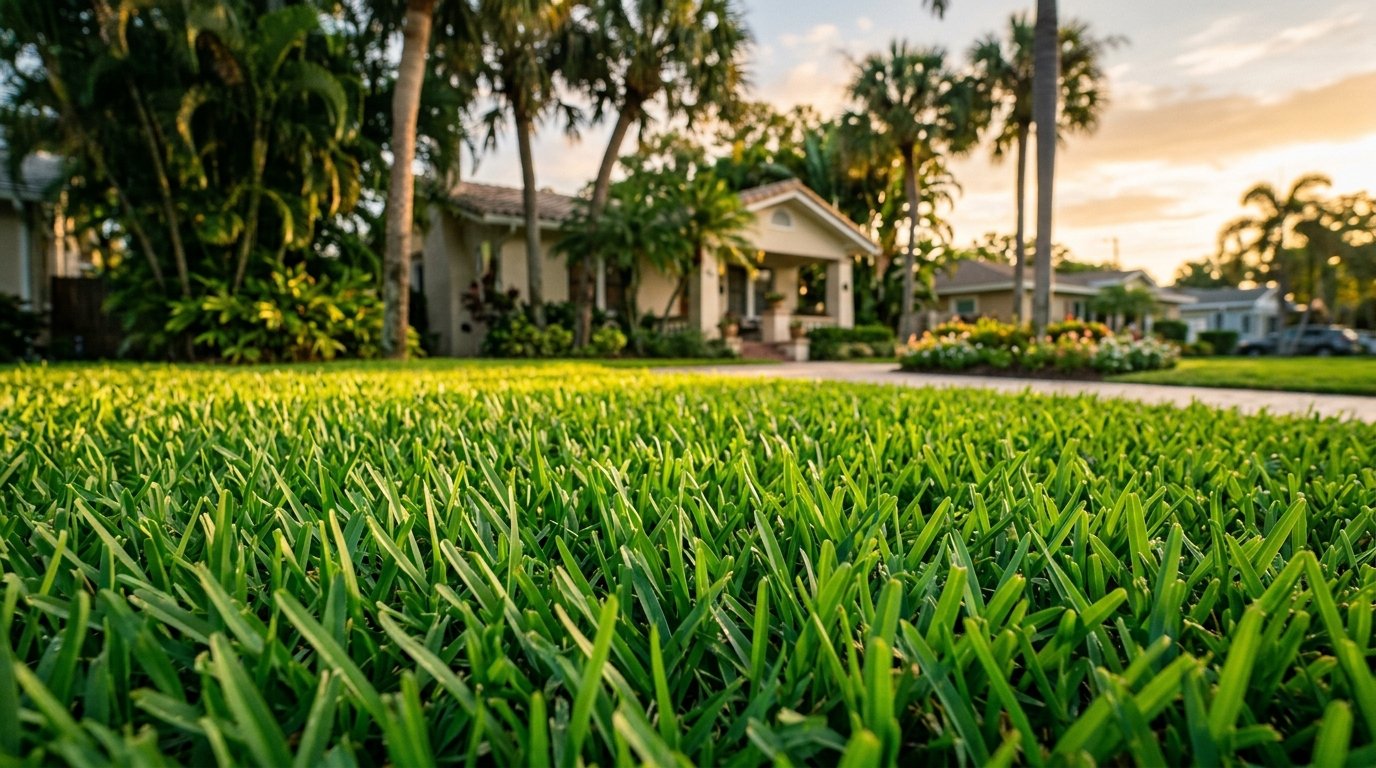
Most Clearwater and Pinellas County yards grow one of four warm-season grass types: St. Augustine, Bahia, Zoysia, or Bermuda. St. Augustine—particularly the Floratam variety—dominates the region. Knowing which grass you have determines everything from mowing height and fertilizer timing to how you treat chinch bugs, manage drought, and prep for hurricane season.
- St. Augustine (Floratam) is the most common lawn grass in Clearwater—identifiable by its wide, flat blades and dense carpet growth.
- Each grass type has different mowing heights, water needs, and pest vulnerabilities; one treatment does not fit all.
- Misidentifying your grass leads to wrong fertilizer ratios, scalping, and wasted money.
- Zoysia and Bermuda thrive in high-traffic areas but need more sunlight than St. Augustine.
- A Florida lawn specialist can confirm your grass type and build a care plan that fits your specific yard.
Why Grass Identification Actually Matters in Florida
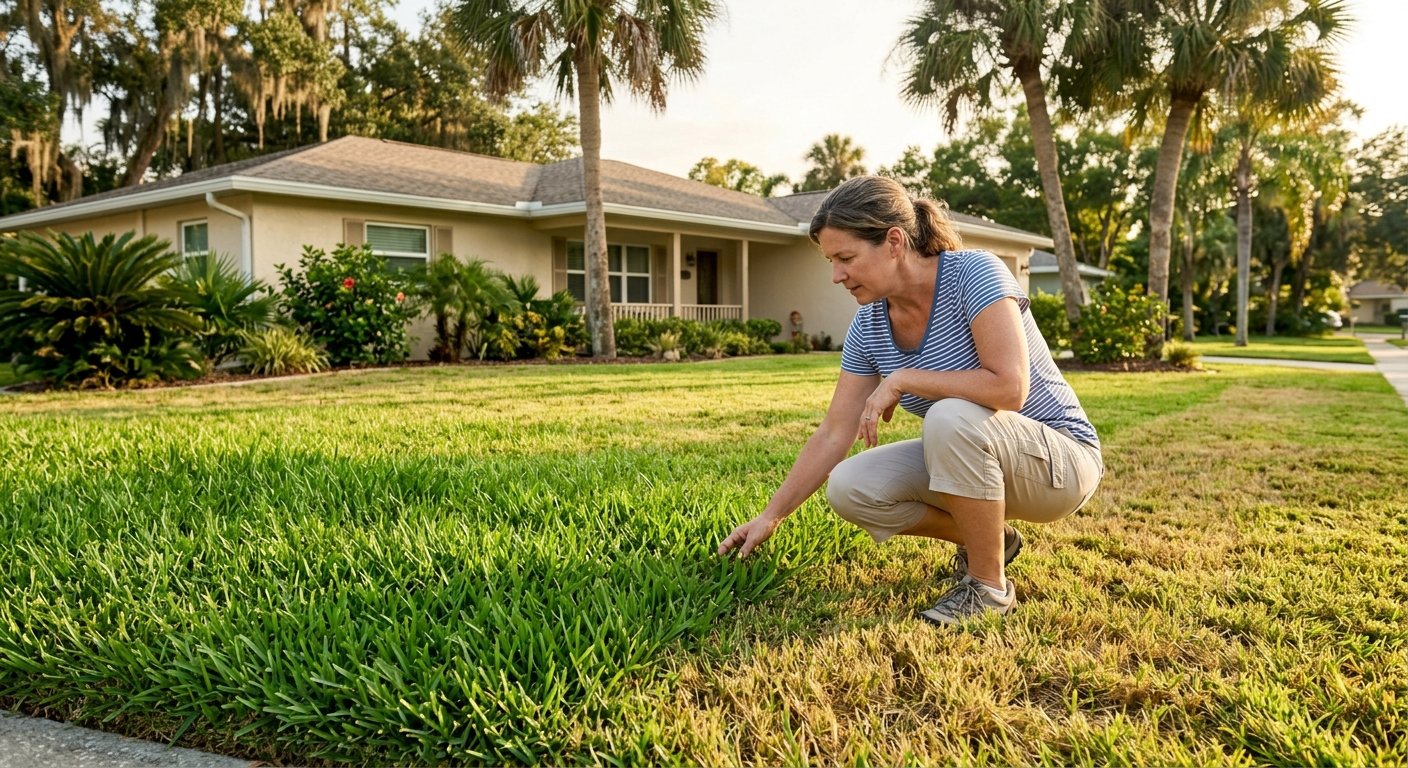
It sounds like a small detail—what kind of grass you have—but it has real consequences in a climate like ours. Florida’s warm, humid conditions create a very different lawn environment than what you’d find almost anywhere else in the country. According to the University of Florida IFAS Extension, selecting and maintaining the right turfgrass variety is one of the single most important factors in keeping a Florida lawn healthy and sustainable long term.
When homeowners apply the wrong fertilizer blend, mow at the wrong height, or irrigate on the wrong schedule—it’s usually because they don’t know what they’re growing. The grass suffers, problems compound, and the yard declines even when you’re trying to do the right thing. That’s where local expertise pays off in ways a generic lawn care app simply can’t match.
The Four Grass Types You’ll Find in Clearwater
St. Augustine Grass
Walk through almost any residential neighborhood in Clearwater or Belleair and you’re looking at St. Augustine grass. It’s the dominant choice across Pinellas County for good reason: it tolerates Florida’s heat, handles partial shade better than most warm-season varieties, and establishes a thick, attractive carpet that chokes out weeds when healthy.
Floratam is the most widely planted cultivar here. You’ll recognize it by its broad, flat blades with a slightly coarse texture and a blue-green color. It spreads by stolons—above-ground runners—rather than seed, which means any bare patches need sod, not overseeding.
The tradeoff? St. Augustine is the preferred meal for chinch bugs, one of the most destructive lawn pests in this region. It’s also susceptible to brown patch fungal disease during cooler, wet months. Proper mowing at 3.5 to 4 inches, appropriate irrigation, and seasonal fertilization are non-negotiable for keeping it healthy.
Chinch bugs damage St. Augustine by injecting a toxin while feeding, causing irregular yellow or brown patches that spread outward. Because this mimics drought stress, many homeowners water more—which makes the problem worse. If you see dry-looking patches near driveways or sun-exposed edges, suspect chinch bugs before assuming drought.
Bahia Grass
Bahia is the low-maintenance workhorse of Florida lawns. It has a coarser, open texture with narrower blades than St. Augustine, and it produces distinctive Y-shaped seed heads throughout the growing season. It tolerates drought, poor soil, and heavy use better than most grasses—which is why you see it along roadsides and on larger properties where irrigation isn’t consistent.
The downside for homeowners who value appearance: Bahia doesn’t create the dense, lush carpet most people picture when they think “beautiful lawn.” It can look sparse and weedy if not managed consistently. It also won’t perform well in shade. But if your yard gets full sun and you want a resilient, low-input grass, Bahia is a genuine option.
Zoysia Grass
Zoysia has been gaining popularity in Clearwater and throughout Pinellas County as homeowners look for alternatives to St. Augustine that offer better density and a fine-textured appearance. It grows more slowly than St. Augustine, which means less frequent mowing—and it holds up to foot traffic particularly well.
Zoysia requires full to mostly-full sun and may thin in shadier areas. It goes dormant and turns brown during Florida’s cooler months, which surprises some homeowners the first time they see it in January. It bounces back reliably as temperatures warm, but that dormancy period is worth knowing about before you commit to it.
Bermuda Grass
Bermuda is the grass of sports fields and golf course fairways—fine-bladed, dense, and highly resilient to traffic. In residential Clearwater settings, it’s less common but occasionally used in front yards with maximum sun exposure or on properties where durability matters more than a manicured look.
It requires frequent mowing (sometimes twice a week during peak growth), full sun, and consistent fertilization to stay attractive. It also spreads aggressively and can invade garden beds if not edged regularly. Bermuda is a high-performance grass—but it demands a high level of commitment in return.
| Characteristic | St. Augustine | Bahia | Zoysia | Bermuda |
|---|---|---|---|---|
| Blade texture | Wide, coarse | Medium, open | Fine to medium | Very fine |
| Shade tolerance | Moderate | Poor | Low | Very low |
| Drought tolerance | Moderate | High | Good | High |
| Traffic tolerance | Moderate | High | High | Very high |
| Common pests | Chinch bugs | Mole crickets | Billbugs | Armyworms |
| Mow height | 3.5–4 in | 3–4 in | 1.5–2.5 in | 1–2 in |
How to Identify Your Grass Right Now
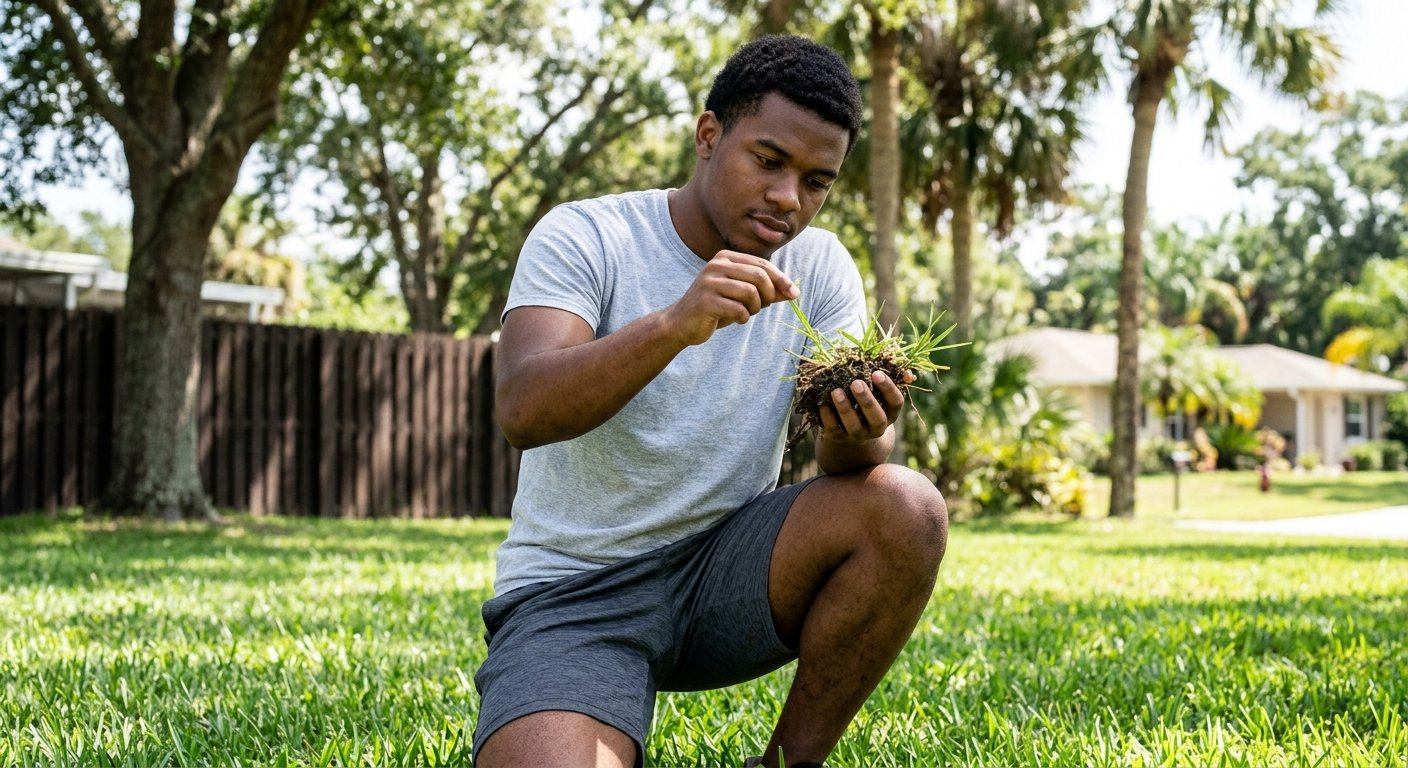
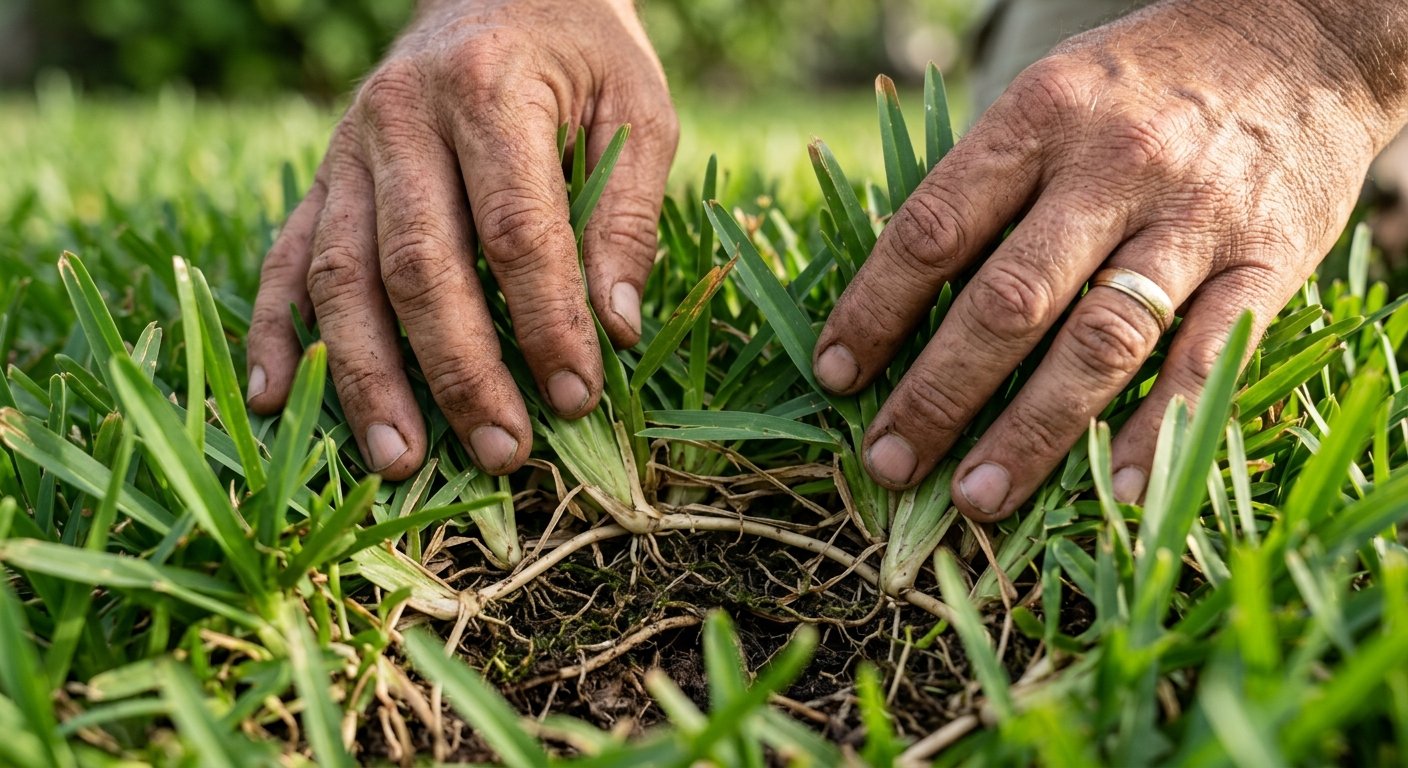
You don’t need a laboratory. Start by pulling a small clump from your lawn and looking at three things: blade width, growth pattern, and texture. Wide, flat blades with a central midrib and a blue-green tint almost always indicate St. Augustine. Narrow blades with visible seed heads that fork into a Y shape point to Bahia. A dense, low-growing turf with fine blades that feels almost like carpet suggests Zoysia. And if your lawn looks like a putting green when mowed very short and grows aggressively into landscape beds, it’s likely Bermuda.
Still unsure? Look at the base of the plant. St. Augustine spreads via stolons that lie on top of the soil—you can see and feel them. Bahia has a thicker, more fibrous root base. Zoysia forms a tight thatch layer just above the soil surface.
Take a close-up photo of a blade, the base of the plant, and any seed heads present, then compare against the University of Florida IFAS turfgrass identification resources. When in doubt, a local lawn care professional can confirm during an on-site visit—no guessing required.
Why Local Knowledge Changes the Outcome
Clearwater’s proximity to the Gulf introduces variables that generic lawn care guides miss entirely. Salt spray from coastal winds affects grass differently by variety—St. Augustine and Zoysia handle it reasonably well, while Bermuda can show salt stress symptoms in yards just a few blocks from the water. Our team serving Clearwater, Belleair, and Sarasota understands these nuances because we see them in real yards every week.
There’s also the matter of Florida’s fertilizer blackout periods. Pinellas County’s fertilizer ordinance restricts nitrogen and phosphorus applications from June 1 through September 30—exactly when many homeowners feel the urge to fertilize because their lawn is struggling in the heat. Knowing your grass type helps you time applications correctly in the windows before and after the blackout to give your lawn what it needs without running afoul of local rules.
Our lawn care services in Clearwater are built around these local realities. For Belleair residents, our Belleair lawn care approach applies the same grass-specific, neighborhood-aware thinking. And if you want to understand how mowing height affects your specific variety, our lawn mowing service page breaks down what we look for on every visit.
Knowing your grass type isn’t lawn trivia—it’s the foundation every good care decision is built on.
Frequently Asked Questions
How can I tell St. Augustine from Zoysia without a professional?
St. Augustine blades are noticeably wider and flatter—roughly the width of your pinky finger—with a coarser feel. Zoysia blades are much finer and the turf forms a tighter, denser mat that resists being pulled apart easily. If your lawn has visible above-ground stolons running across the soil surface, that’s a strong indicator of St. Augustine.
Can I have more than one grass type in my yard?
Yes, and it’s more common than homeowners expect—especially in yards where sod was patched at different times or where a grass has naturally spread from a neighbor’s property. Mixed lawns are harder to care for because the two types may need different mowing heights and fertilizer timing. A lawn professional can identify the mix and recommend how to manage or transition the yard.
Does my grass type affect how I handle hurricane prep?
It affects your timing more than your method. Grasses like St. Augustine should not be heavily fertilized late in the season when a storm could strip or saturate the lawn. After a storm, saltwater intrusion affects all grass types, but recovery speed varies—Bahia typically rebounds faster from flooding stress than St. Augustine. Avoid scalping any grass type immediately before storm season.
Should I overseed my St. Augustine lawn in winter?
No. St. Augustine does not produce viable seed and cannot be established by overseeding. If your lawn thins in winter, it’s either going into normal semi-dormancy or experiencing a pest or disease issue that should be identified. Bare patches need sod plugs or fresh sod installation, not seed.
What’s the biggest mistake Clearwater homeowners make based on wrong grass identification?
Mowing too short is the most common consequence. Bahia tolerates a lower cut, but St. Augustine scalped below 3.5 inches loses its ability to shade out weeds and becomes vulnerable to chinch bugs and fungal disease. Many homeowners mow on the same setting regardless of grass type, which gradually weakens the lawn over a single growing season.
Not Sure What’s Growing in Your Yard?
Our Florida lawn care specialists serve Clearwater, Belleair, and Sarasota—and we’ll give you a straight answer along with a care plan built around what your grass actually needs.
About Schwahn's Lawns
Schwahn's Lawns provides expert lawn care services to homeowners and businesses throughout Clearwater and Pinellas County, Florida. With deep knowledge of Florida's unique climate challenges—from chinch bugs and brown patch disease to salt damage and hurricane preparation—they serve as trusted local partners rather than transactional vendors. Their approach emphasizes educational support and personalized care that larger national competitors cannot match, helping property owners achieve beautiful outdoor spaces they can take pride in. Visit schwahnslawns.com →