
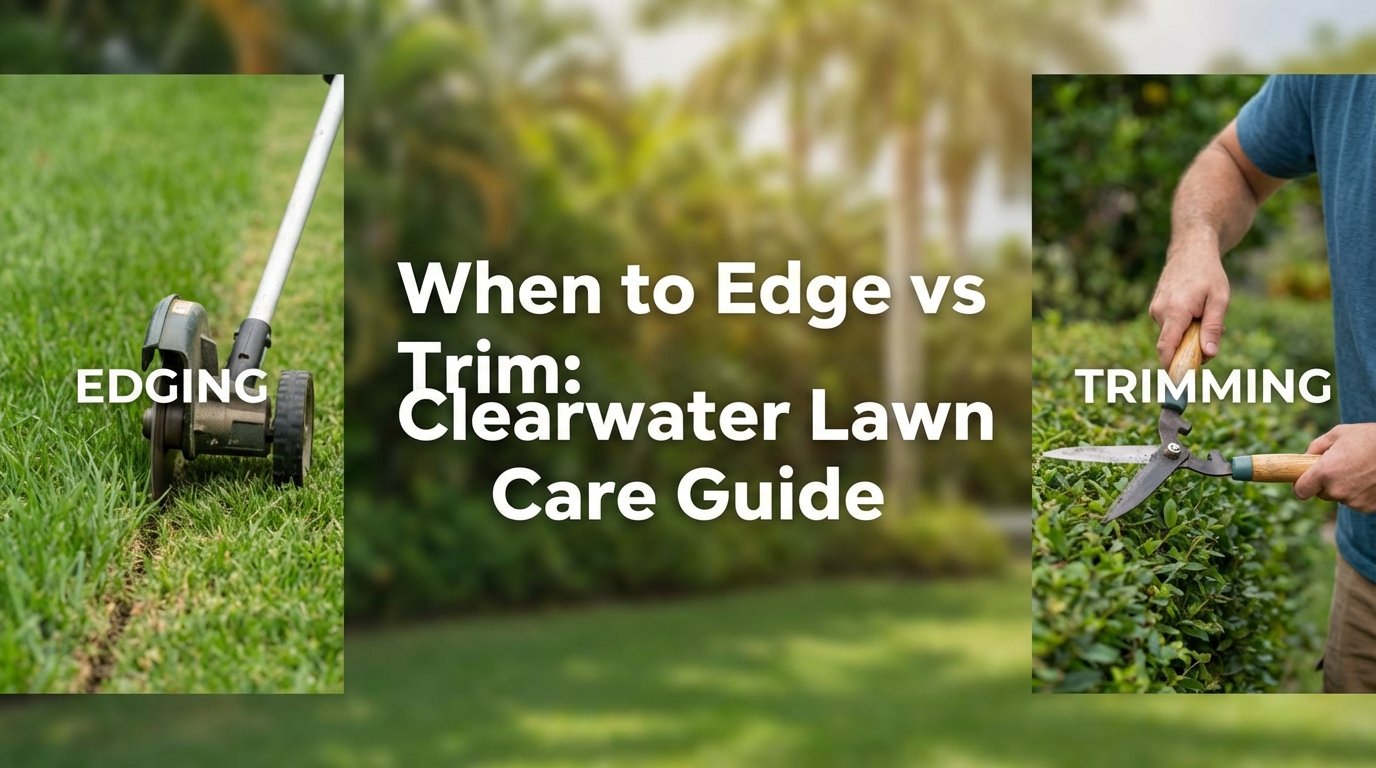
Walk down any street in Clearwater and you’ll notice something immediately: the difference between lawns that look professionally maintained and those that don’t often comes down to two simple techniques. Yet most homeowners struggle to understand when to edge versus when to trim, leaving their St. Augustine grass looking unfinished despite hours of weekend work.
Understanding the distinction between edging and trimming isn’t just about terminology—it fundamentally changes how your Pinellas County property looks and how efficiently you maintain it. Let’s break down exactly what each technique does, when to use them, and why Gulf Coast conditions make these practices especially important for Clearwater lawns.
Understanding the Fundamental Difference
Edging and trimming serve completely different purposes, though they’re often confused or used interchangeably by homeowners searching for lawn care solutions.
What Edging Actually Does
Edging creates clean, defined vertical lines between your lawn and hard surfaces like driveways, sidewalks, and patios. An edger cuts down into the soil, establishing a clear boundary that prevents grass from creeping onto pavement. This vertical cut typically goes one to two inches deep, removing both grass blades and the root system attempting to spread beyond your lawn’s intended borders.
In Clearwater’s warm, humid climate, St. Augustine grass—the predominant turf variety in our area—grows aggressively through runners called stolons. Without regular edging, these runners quickly overtake concrete surfaces, creating that overgrown appearance that diminishes curb appeal within just a few weeks.
What Trimming Accomplishes
Trimming, often called string trimming or weed whacking, cuts grass horizontally at the same height as your mower. This technique addresses areas your mower can’t reach: around trees, fence posts, mailboxes, garden beds, and tight corners. A string trimmer uses a rapidly rotating nylon line to slice through grass blades, giving your lawn a finished, uniform appearance.
Think of it this way: your mower handles the open field, your trimmer handles the detail work, and your edger handles the boundaries. Each tool plays a specific role in creating that manicured look Clearwater homeowners appreciate.
When to Edge Your Clearwater Lawn
The Gulf Coast growing season means your edging schedule looks different than northern recommendations you might find online.
Frequency Guidelines for Pinellas County
During peak growing season—roughly April through October when temperatures and humidity remain high—St. Augustine grass requires edging every two to three weeks. This aggressive schedule matches the growth rate of warm-season grasses in our subtropical environment.
From November through March, when growth slows but doesn’t stop entirely, monthly edging typically suffices. However, pay attention to your specific lawn. Properties with southern exposure or additional irrigation may need more frequent attention even during cooler months.
Signs Your Lawn Needs Edging
Don’t just edge by the calendar. Watch for these indicators:
- Grass blades or runners extending onto sidewalks or driveways
- Loss of clean lines between turf and pavement
- Soil buildup along hard surface edges
- Grass creating a “lip” that extends over concrete
- Difficulty seeing where lawn ends and hardscape begins
The salt air and sandy soil common near the Gulf create conditions where grass boundaries blur quickly. Sand washes over edges during afternoon thunderstorms, and salt-tolerant St. Augustine adapts readily to various growing conditions, making it particularly persistent at crossing boundaries you’ve established.
When to Trim Your Lawn
Trimming follows a completely different schedule because it’s tied directly to mowing rather than grass expansion.
The Golden Rule of Trimming
Trim every single time you mow. There are no exceptions to this rule if you want professional-looking results. Trimming isn’t an occasional task—it’s the finishing touch that completes every mowing session.
For most Clearwater lawns during growing season, this means weekly trimming. The same conditions that promote lush St. Augustine growth—warm temperatures, frequent rain, high humidity—create rapid regrowth in those hard-to-reach areas around obstacles.
Areas Requiring Extra Trimming Attention
Certain spots on Pinellas County properties need more frequent trimming passes:
- Fence lines, especially chain link where grass weaves through openings
- Around irrigation heads and control boxes
- Tree rings, particularly for mature oaks common in established neighborhoods
- Landscape bed borders where mulch meets turf
- Along property lines, especially those marked with utility easements
These areas often receive uneven sunlight or water distribution, causing irregular growth patterns that require attention beyond your standard mowing schedule.
Technique Matters: Doing It Right
Knowing when to edge and trim matters little if technique is poor. Here’s what separates amateur results from professional quality.
Proper Edging Technique
Start with the right tool. Gas-powered edgers provide the torque needed to cut through Florida’s sandy soil and dense St. Augustine root systems. Battery-powered options have improved dramatically but still struggle with our tough growing conditions.
Hold the edger so the blade runs perpendicular to the ground, creating that clean vertical cut. Move steadily along hardscape edges, letting the tool’s weight do the work. Rushing creates wobbly lines that look unprofessional.
After edging, blow or sweep debris off sidewalks and driveways immediately. Our afternoon thunderstorms will wash soil and grass clippings into storm drains or cement them onto pavement if left to sit.
Professional Trimming Standards
Trimmer technique dramatically affects results. Hold the string trimmer so the cutting line runs parallel to the ground, matching your mower height. This creates uniform grass height across your entire lawn.
Many homeowners make the mistake of scalping—cutting too low around obstacles. This creates brown patches in your St. Augustine, particularly damaging during summer stress periods when chinch bugs and brown patch fungus already threaten lawn health.
Always wear eye protection. Gulf breeze conditions mean debris flies unpredictably, and trimming kicks up sand, small rocks, and plant material at high speeds.
Why Clearwater Conditions Make This Critical
Our specific Gulf Coast environment creates unique challenges that make proper edging and trimming more important than in many other regions.
Sand and Salt Challenges
The sandy soil throughout Pinellas County shifts easily. Without defined edges, sand gradually migrates from planting beds onto lawns and from lawns onto hardscapes, blurring boundaries and creating maintenance headaches. Regular edging maintains these critical separations.
Salt spray from the Gulf affects properties even miles inland. This salt accumulation on grass near pavement edges makes those areas more susceptible to damage, meaning precision trimming—avoiding scalping vulnerable turf—becomes essential for maintaining healthy grass coverage.
Hurricane Preparation Considerations
Well-maintained edges and properly trimmed lawns contribute to storm preparation in ways many homeowners don’t consider. Overgrown grass along driveways and sidewalks traps debris during heavy rain, potentially blocking drainage. Clean edges facilitate water flow away from your home’s foundation—critical during tropical systems that regularly affect our area.
The St. Augustine Factor
St. Augustine grass, while perfect for our climate, grows aggressively through stolons that creep across surfaces. This vigorous growth means Clearwater lawns require more vigilant edging than cooler-climate grasses. Missing even one edging cycle during peak season can set you back weeks in maintaining crisp boundaries.
DIY vs Professional Lawn Edging Service
Understanding when and how to edge and trim doesn’t automatically mean doing it yourself makes sense for your situation.
The Real Cost of DIY
Quality edging equipment represents significant investment. Professional-grade edgers start around $300, and string trimmers capable of handling St. Augustine’s thickness cost $200-400. Factor in maintenance, fuel, storage, and most importantly, your time—typically 30-45 minutes for edging and trimming an average Clearwater lot.
Multiply that time investment across 25-30 sessions annually, and you’re dedicating 15-20 hours just to edging and trimming, not including mowing time.
What Professional Services Provide
When searching for “lawn edging and trimming near me” or “grass trimming near me,” you’re not just paying for someone to operate equipment. Professional lawn care service Clearwater FL teams bring:
- Consistent scheduling that matches grass growth patterns
- Commercial-grade equipment that delivers superior results
- Experience recognizing when lawns need attention beyond standard schedules
- Knowledge of local conditions affecting Pinellas County properties
- Integrated care that addresses edging, trimming, and overall lawn health simultaneously
Local professional lawn edging service providers understand nuances that national chains miss—like how Gulf breeze patterns affect growth rates differently across your property, or how afternoon thunderstorm runoff impacts edge stability in specific neighborhoods.
Common Mistakes to Avoid
Whether handling maintenance yourself or evaluating service providers, watch for these frequent errors that undermine lawn appearance.
Edging at the wrong angle: Angled cuts rather than vertical cuts create weak, crumbling edges that deteriorate quickly in sandy soil.
Trimming too low: Scalping stresses St. Augustine grass, creating entry points for pests and disease common in our humid climate.
Inconsistent scheduling: Letting edges grow out significantly, then cutting back drastically creates more work and stresses your lawn.
Ignoring debris cleanup: Grass clippings left on sidewalks and driveways create slip hazards and stain concrete, especially problematic with our frequent rain.
Using dull trimmer line: Old line tears grass rather than cutting cleanly, creating brown, damaged blade tips that diminish lawn appearance and health.
Your Clearwater Lawn Deserves Expert Attention
Understanding when to edge versus trim transforms lawn maintenance from guesswork into strategic care. The distinction matters because each technique serves a specific purpose in creating that finished, professional appearance that enhances your property value and neighborhood appeal.
Clearwater’s unique Gulf Coast conditions—aggressive St. Augustine growth, sandy shifting soil, salt exposure, and year-round growing seasons—make consistent, knowledgeable edging and trimming essential rather than optional. These aren’t tasks you can skip or postpone without visible consequences appearing within weeks.
At Schwahn’s Lawns, we’ve spent years learning exactly how Pinellas County properties respond to our subtropical climate. We know which neighborhoods need more frequent edging due to soil composition, which properties battle shade and moisture issues requiring adjusted trimming schedules, and how to maintain your lawn through summer stress and hurricane season disruptions.
If you’re spending weekends fighting to maintain clean edges and uniform grass height, or if you’re frustrated with services that don’t understand local conditions, let’s talk about how proper edging and trimming fits into comprehensive lawn care tailored specifically to your Clearwater property. Professional maintenance isn’t about doing what you can’t—it’s about doing what we do best so you can enjoy your lawn rather than laboring over it.
Contact Schwahn’s Lawns today for a lawn evaluation. We’ll show you exactly what your property needs and create a maintenance schedule that keeps your lawn looking sharp year-round, with the clean edges and uniform appearance that makes your home stand out for all the right reasons.