
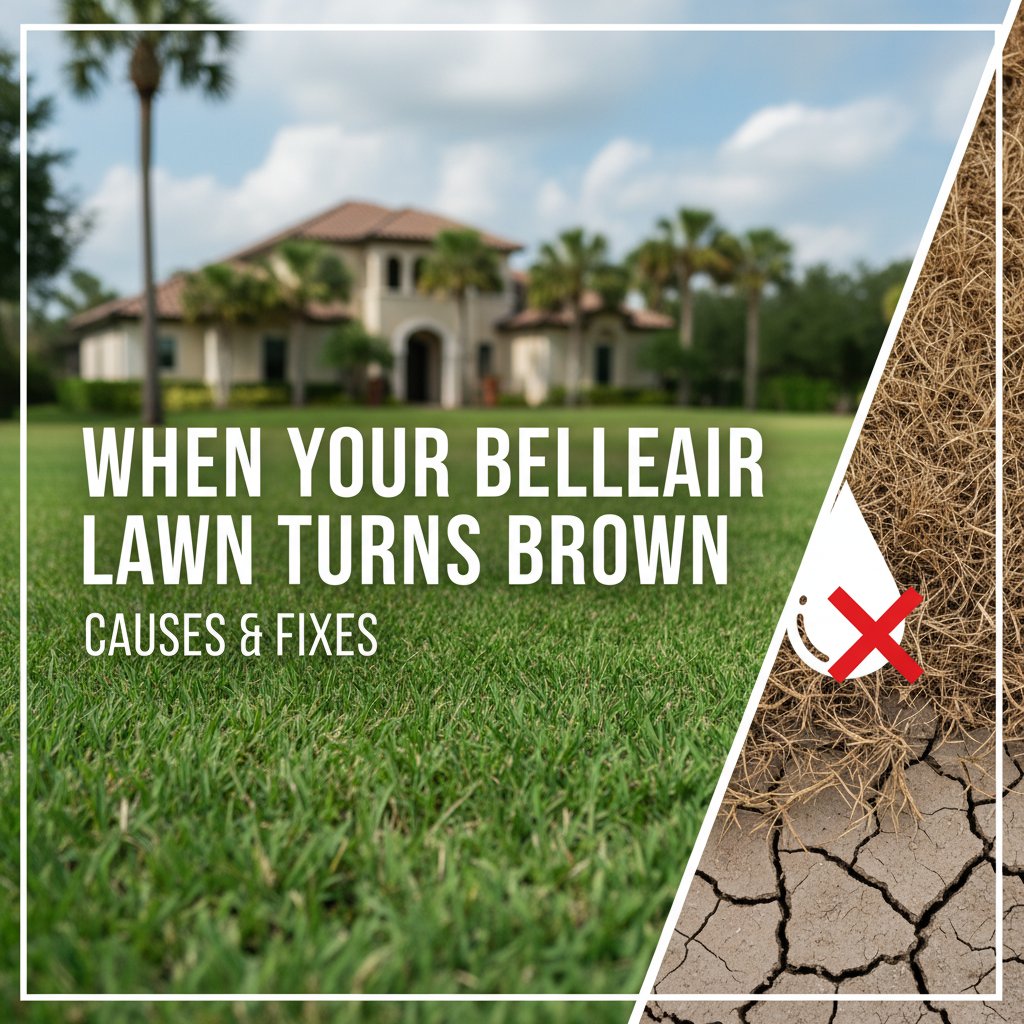
That lush green carpet you’ve worked hard to maintain suddenly shows patches of brown, and you’re standing in your Belleair yard wondering what went wrong. Brown lawns are one of the most frustrating problems facing homeowners in Pinellas County, and the coastal environment here creates unique challenges that make diagnosis tricky. Unlike inland Florida properties, Belleair lawns face salt spray from the Gulf, sandy soil drainage issues, and humidity levels that can trigger disease overnight.
Understanding why your grass turns brown requires looking at several interconnected factors specific to our microclimate. The good news? Most browning issues are fixable once you identify the root cause, and some simple adjustments can prevent recurring problems throughout the year.
The Unique Challenge of Belleair’s Coastal Environment
Belleair properties sit in a distinctive zone where Gulf breezes bring both benefits and challenges. The salt-laden air that makes our sunsets spectacular also settles on grass blades, creating stress that inland lawns never experience. When you combine this with our alkaline sandy soil and intense summer sun, you have a recipe for browning that requires specialized knowledge to address effectively.
The high water table in parts of Belleair also complicates matters. Some neighborhoods experience soggy conditions while others drain too quickly, and these extremes can show similar browning symptoms despite requiring opposite solutions.
Common Culprits Behind Brown Grass in Belleair
Chinch Bugs: The Silent Lawn Killer
Chinch bugs are the number one pest problem for St. Augustine grass throughout Pinellas County. These tiny insects suck the life from grass blades while injecting a toxin that prevents water uptake. The result looks like drought stress—yellowing grass that quickly turns brown—even when you’re watering regularly.
Chinch bug damage typically starts in hot, sunny areas near driveways and sidewalks, then spreads outward in irregular patches. Get down on your hands and knees at the edge of a brown patch, part the grass down to the thatch layer, and look for the small black bugs with white wings. You’ll often see nymphs that are reddish-orange too.
The warm, humid conditions from May through October create perfect breeding grounds for multiple generations. A single female can lay 300 eggs, meaning small populations explode quickly without intervention. Professional lawn care services in Belleair Florida know to monitor for these pests before visible damage appears, catching infestations early when treatment is most effective.
Brown Patch Fungus
When overnight temperatures stay above 68 degrees and humidity remains high—which describes most of our year—brown patch disease thrives. This fungal infection creates circular brown patches that can expand several feet in diameter, with a distinctive gray-to-purple “smoke ring” at the advancing edge during active growth.
St. Augustine grass is particularly susceptible, especially when over-fertilized with nitrogen during warm, wet periods. Evening watering that leaves grass wet overnight practically invites this disease to take hold. Brown patch can devastate a Belleair lawn in just days during ideal conditions, making quick identification crucial.
Improper Watering Practices
Both underwater and overwatering cause browning, and Belleair’s sandy soil makes finding the right balance challenging. Water drains quickly through sand, meaning frequent shallow watering never reaches root zones. Grass develops shallow roots, becomes drought-stressed, and turns brown at the first sign of heat stress.
Conversely, some properties retain water due to clay layers or poor drainage, creating soggy conditions that suffocate roots and promote disease. The Southwest Florida Water Management District recommends 0.5 to 0.75 inches of water per application, but this varies by soil type and season.
Many Belleair neighborhoods have specific watering restrictions that homeowners must follow. Currently, most addresses water twice weekly on assigned days. Professional lawn maintenance Belleair FL services understand how to maximize these limited windows while keeping grass healthy.
Salt Damage From Gulf Proximity
Living near the Gulf means salt accumulation in soil and on grass blades. After strong west winds or tropical systems, you might notice browning on the side of your property facing the water. Salt draws moisture from grass tissue, causing dehydration that manifests as browning leaf tips that progress downward.
Properties within a mile of the coast experience the most severe salt issues, but even inland Belleair neighborhoods see some impact. Salt also accumulates in soil over time, affecting pH and nutrient availability. This is one reason why lawn care Belleair strategies differ significantly from those used in central Florida.
Scalping and Mowing Mistakes
St. Augustine grass should be mowed to 3.5 to 4 inches, but many homeowners or lawn services cut too low, thinking shorter grass requires less frequent mowing. Scalping removes the green leaf tissue, exposing stems and soil to direct sunlight. The grass browns, weakens, and becomes vulnerable to pests and weeds.
Dull mower blades tear rather than cut, creating ragged edges that turn brown and provide entry points for disease. Mowing wet grass compounds the problem by spreading fungal spores across the entire lawn.
Grub Damage
White grubs—the larval stage of various beetles—feed on grass roots below the surface. Affected areas turn brown and feel spongy underfoot. You can often roll back damaged turf like carpet because roots have been severed. June through August represents peak damage time as grubs feed most actively.
Traffic and Compaction
Sandy soil compacts more easily than many realize, especially in high-traffic areas like pathways to pools or docks. Compacted soil restricts root growth and water penetration, leading to thin, brown grass. Properties with frequent foot traffic or events often develop these patterns.
Diagnosing Your Specific Problem
Start by examining where and when browning appears. Does it follow a pattern? Sun-exposed areas suggest drought stress or chinch bugs. Circular patches point to brown patch disease. Browning near the street could indicate salt damage or pet urine.
Check soil moisture six inches deep. Dry soil means watering issues or root damage. Soggy soil suggests drainage problems or overwatering. Pull on brown grass—if it lifts easily with no roots attached, suspect grubs.
Look for pests at the transition zone between green and brown grass during morning hours when they’re most active. Note any patterns related to your maintenance schedule—browning after mowing suggests scalping or dull blades.
Sometimes multiple factors combine. Chinch bugs prefer drought-stressed grass, so watering problems often lead to pest problems. Salt damage weakens grass, making it susceptible to disease.
Solutions for Different Browning Causes
Addressing Pest Infestations
For chinch bugs, treatment requires products specifically labeled for this pest. Application timing matters tremendously—treating during peak heat ensures better results. Water the lawn lightly before treatment to bring bugs to the surface, then irrigate after application to move product into the thatch layer where bugs hide.
Professional lawn care Belleair services use integrated pest management approaches, combining treatments with cultural practices that make lawns less hospitable to pests. This includes proper mowing height, balanced fertilization, and strategic watering.
Managing Fungal Diseases
Brown patch requires fungicide applications, but cultural changes prevent recurrence. Water early morning so grass dries quickly. Reduce nitrogen during vulnerable periods. Improve air circulation through selective pruning. Avoid walking on infected areas when wet to prevent spreading spores.
Some St. Augustine varieties show better disease resistance. If brown patch recurs yearly despite good practices, consider renovating with more resistant cultivars like Palmetto or CitraBlue.
Optimizing Irrigation
Adjust your irrigation system seasonally. Cooler months require significantly less water than summer. Install a rain sensor if you haven’t already—it’s required by Florida law and prevents unnecessary watering after rainfall.
Water deeply but infrequently to encourage deep root growth. Run zones long enough to achieve 0.5 to 0.75 inches per application. Place tuna cans around the lawn to measure output and identify coverage gaps.
Consider soil amendments to improve water retention in sandy areas. Professional lawn maintenance Belleair FL providers can core aerate compacted areas and topdress with organic material to enhance soil structure.
Combating Salt Damage
Rinse salt from grass blades after strong Gulf winds or storms using your irrigation system. Apply gypsum to help flush accumulated salts from soil without affecting pH. Some salt-tolerant grass varieties perform better in coastal properties—seashore paspalum works well in high-salt environments.
The University of Florida IFAS Extension provides excellent resources on managing salt-affected landscapes specific to coastal Florida conditions.
Improving Mowing Practices
Sharpen mower blades at least twice during growing season. Never remove more than one-third of grass height in a single mowing. Raise cutting height during stress periods like summer heat or drought. Vary mowing patterns to prevent compaction in wheel tracks.
Prevention: The Best Long-Term Strategy
Preventing brown lawn problems proves easier and less expensive than treating them. Establish a consistent fertilization schedule using slow-release products formulated for Florida soils. Test soil pH every couple years and adjust as needed—St. Augustine prefers slightly acidic to neutral conditions.
Monitor your lawn weekly for early problem signs. Small issues caught early remain manageable, while ignored problems often require aggressive intervention. Walk your property looking for discolored spots, insect activity, or areas that feel different underfoot.
Build soil health through regular organic matter additions. Healthy soil supports healthy grass that naturally resists pests and disease. Consider overseeding thin areas before they become problem zones where weeds establish.
When to Call Professional Lawn Care Services Belleair Florida
Some browning issues resolve with simple DIY adjustments, but others require professional expertise and equipment. Widespread pest infestations need proper product selection and application timing that professionals handle routinely. Disease problems require accurate diagnosis—treating the wrong disease wastes money and allows damage to continue.
Professional lawn care Belleair providers bring specialized knowledge of our microclimate, understanding how Gulf proximity, seasonal weather patterns, and local soil conditions interact. They spot early warning signs homeowners miss and adjust treatments based on real-time observations rather than calendar dates.
Persistent brown areas despite your best efforts often indicate underlying issues like compacted soil, drainage problems, or salt accumulation that require comprehensive solutions beyond basic lawn care.
Frequently Asked Questions
How quickly can a brown lawn recover?
Recovery time depends on the cause and extent of damage. Minor drought stress reverses within days of proper watering. Pest damage requires two to four weeks after treatment. Severe brown patch or grub damage may need several months and possibly sodding to fully recover. Dead grass won’t revive—it requires replacement.
Should I water brown grass?
If browning results from drought, yes—water deeply immediately. However, if disease causes browning, additional water worsens the problem. Proper diagnosis before treatment prevents making issues worse.
Can brown grass spread to my neighbor’s lawn?
Fungal diseases and pest infestations can absolutely spread between properties. Chinch bugs migrate readily, and brown patch spores travel on wind, water, and equipment. Addressing problems promptly protects not just your lawn but neighboring properties too.
Restore Your Belleair Lawn’s Beauty
Brown lawns don’t have to be permanent problems. With proper diagnosis and targeted solutions, your Belleair property can return to the lush, green showcase you envision. Understanding our unique coastal challenges gives you the foundation for making smart lawn care decisions.
At Schwahn’s Lawns, we’ve spent years mastering the specific needs of Belleair and Pinellas County properties. We understand how salt air, sandy soil, and our subtropical climate create challenges that generic lawn care approaches can’t solve. Whether you need help diagnosing current brown patches or want to prevent future problems, we’re your local partner in creating and maintaining beautiful, healthy lawns.
Ready to bring your lawn back to life? Contact Schwahn’s Lawns today for a comprehensive evaluation and customized treatment plan designed specifically for your Belleair property’s unique needs.